
Reviewed · GOBUSTAN PETROGLYPHS & MUD VOLCANO TRIPS
Baku: Gobustan, Volcanoes, Fire Temple and Yanardag Day Trip
Eternal fire and Stone Age art in one day. You get Gobustan rock drawings plus the Yanardag burning gas flame, all tied together by great guiding. I like that it stays focused on history, not quick photo stops and mall detours.
What also makes this trip feel smarter is the no shopping stop approach, so your time goes into the sites that matter. One thing to plan around: on rainy days, the mud volcanoes may be skipped for safety.
In This Review
- Key Points to Know Before You Go
- A 6-8 Hour Circuit of Gobustan and Azerbaijan’s Fire Story
- Pickup, The Oil Well Stop, and How the Day Sets Its Theme
- Gobustan National Park Museum: How the Rock Art Hits Harder
- Gobustan’s Rock Drawings and Petroglyphs: What to Look For
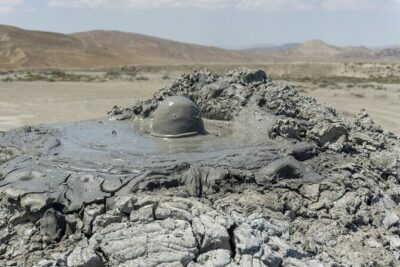
- Mud Volcanoes on Absheron: Watching Earth Breathe
- Lunch Break: Eat Local Without Letting It Stall the Day
- Ateshgah of Baku: Fire Temple, Fire Worship, and a Still-Visible Meaning
- Yanardag (Burning Mountain): When Natural Gas Looks Like Magic
- Guides and Group Size: Why the Best Part Is the Person Talking
- Price and Value: What $29 Really Covers
- Photo Tips and Comfort Notes for a Full Day Outside the City
- Should You Book This Baku Gobustan and Fire Temple Day Trip?
- FAQ
- How long is the day trip from Baku?
- What sites are included in the day plan?
- Is lunch included?
- Do you make shopping stops?
- What happens if it rains?
- What languages are available for the guide?
Key Points to Know Before You Go
- No-shopping-stop day plan that keeps the route history-heavy instead of store-heavy
- Gobustan National Park Museum, indoor and outdoor viewing, so the rock art lands fast
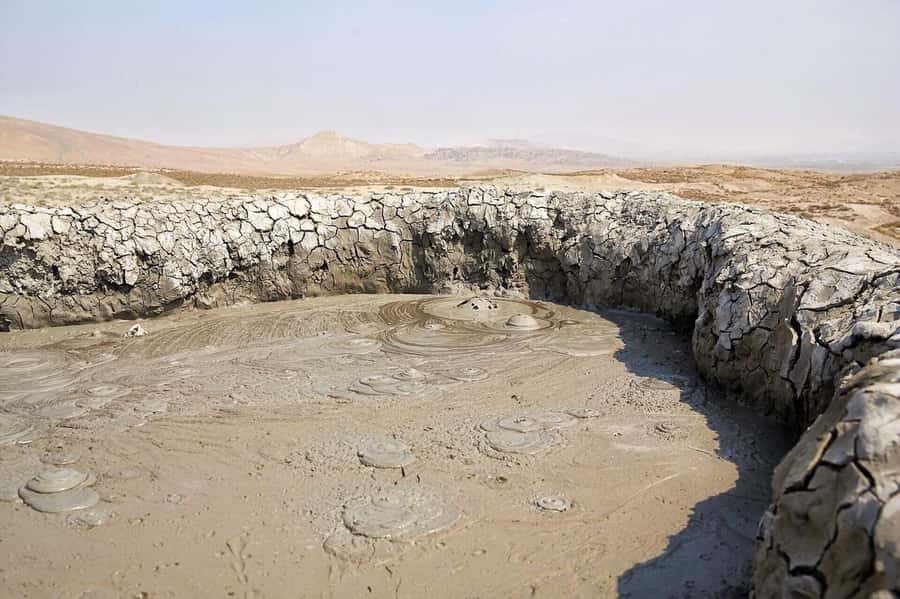
- Mud volcano eruptions on the Absheron coast with short but memorable viewing time
- Ateshgah Fire Temple and Yanardag for Zoroastrian fire symbolism that still looks real
- A quick Bibi-Heybat stop near Baku that connects the area to the oil story
Ateshgah and Yanardag fire trips to compare:
- BEST Gobustan, Volcanoes & Absheron Fire Tour (Group or Private)
★ 5.0 · 1,254 reviews - Gobustan and Absheron tour (All inclusive)
★ 5.0 · 1,014 reviews - Gobustan & Mud, Fire Temple, Burning Mountain (Group & Private)
★ 4.5 · 418 reviews
A 6-8 Hour Circuit of Gobustan and Azerbaijan’s Fire Story
This is a full-day Baku outing that moves you off the city map and into three big “wow” zones. You start with prehistory at Gobustan, shift to geology and mud volcano eruptions, then end with religious and natural fire at Ateshgah and Yanardag.
The big value for me is focus. For $29, you’re not paying to burn time. You’re paying for transport, a professional guide, and built-in site access like guided museum time and skip-the-ticket-line entry where offered.
It is a 6-8 hour day, so it will feel like a day trip, not a slow stroll. If you want a few hours of deep wandering on your own, you might feel slightly boxed in by the schedule.
Pickup, The Oil Well Stop, and How the Day Sets Its Theme
Morning starts with pickup from a long list of Baku drop-off and pickup points. You’ll meet your guide at your hotel lobby, and the operator confirms your pickup time the day before.
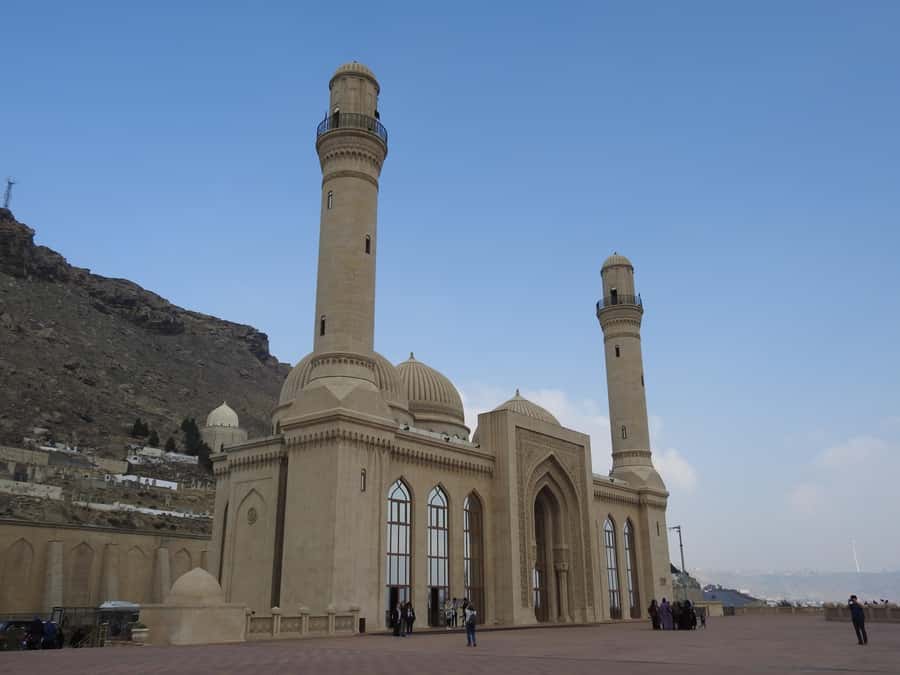
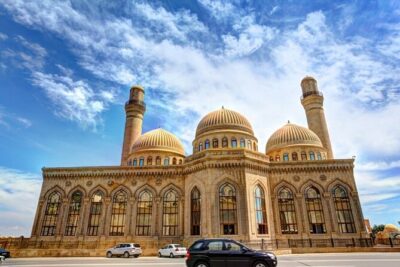
Then the day gets its “Azerbaijan has always had fuel” theme early with a stop near Bibi-Heybat. The guide takes you to an industrialized oil well site close to Bibi-Heybat Mosque, a quick but meaningful bridge from the country’s ancient symbolism to its modern oil era.
Why this works: it stops you from treating Gobustan and fire temples like separate curiosities. Instead, you see the region as one long story about energy, land, and survival.
Gobustan National Park Museum: How the Rock Art Hits Harder
Next comes the Gobustan Museum of Petroglyphs, about 70 kilometers from Baku. You get guided time for around an hour, and that matters because rock art is easy to misunderstand if you only glance and move on.
The museum combines indoor and outdoor displays, which is handy. Indoors, you can study details without squinting. Outdoors, you get the scale sense, and the setting starts to make sense.
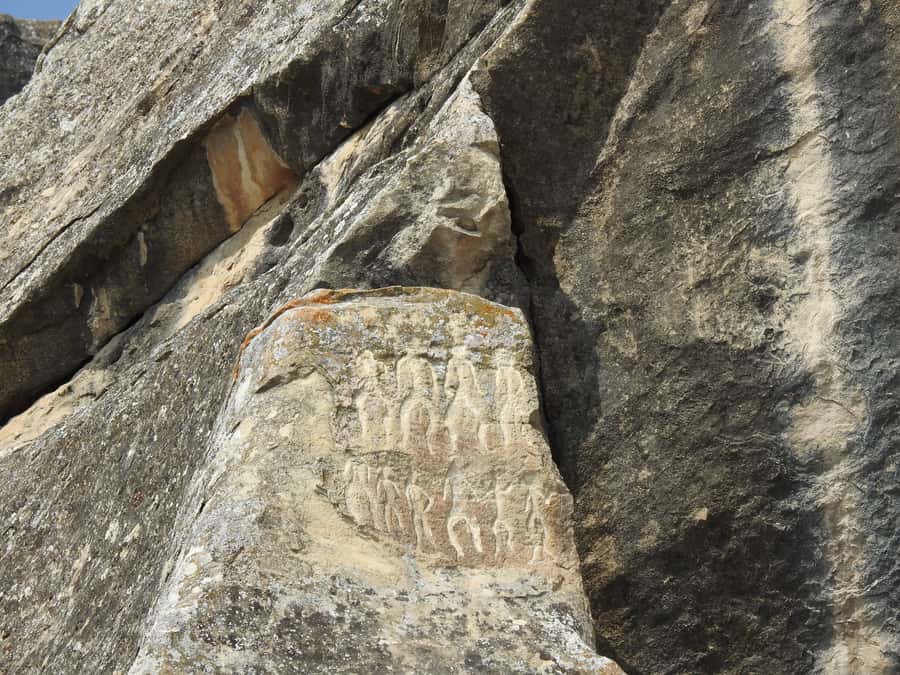
What I like about Gobustan here is that the guiding frames the carvings as evidence of how ancient people lived: their world view, their economy, and what they noticed enough to mark in stone. It is not just “pretty drawings.” It is a record of attention.
Gobustan petroglyph and mud volcano trips to compare:
- Baku: Gobustan, Mud Volcano, Fire Mount, Temple Lunch Entry★ 4.9 · 3,246 reviews
- Baku: Gobustan Absheron Tour Entry Tickets included★ 4.9 · 329 reviews
- Gobustan-Mud Volcan-Fire Temple and Mountain Tour/Entrance inc★ 5.0 · 267 reviews
- Baku:Gobustan Mud Volcanoes Temple & Entry tickets included★ 4.8 · 178 reviews
Gobustan’s Rock Drawings and Petroglyphs: What to Look For
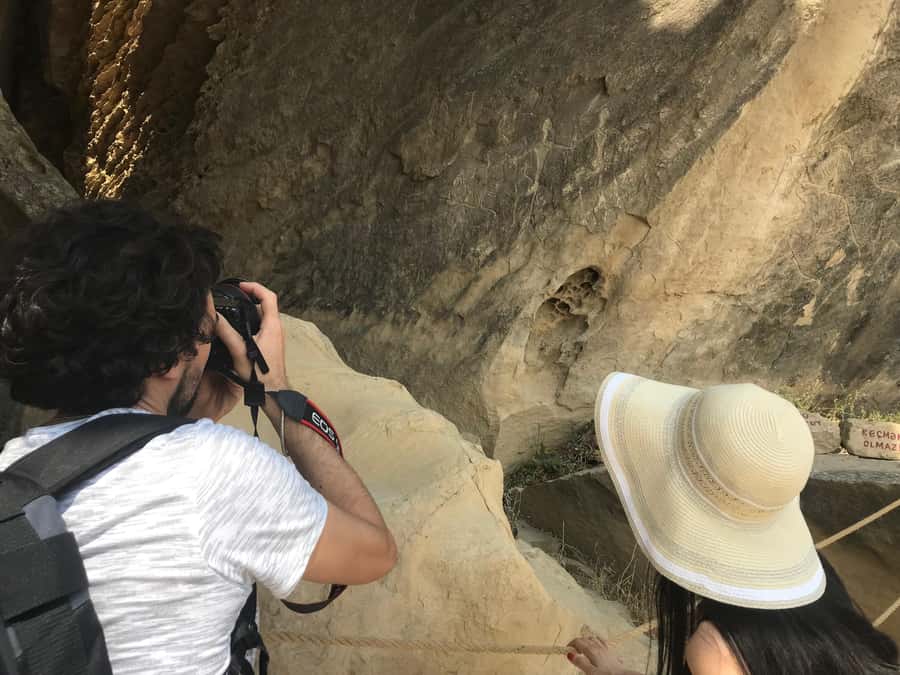
At Gobustan National Park, you’re looking at prehistoric rock drawings and petroglyphs carved into cave walls and on rocks. The experience is UNESCO World Heritage in the sense that the site is preserved for its archaeological importance, not just for quick sightseeing.
Give your eyes a simple job:
- Look for recurring shapes and animals, then notice how they repeat across areas.
- Pay attention to how human figures are shown compared with tools or hunting scenes.
- Watch for weathering and tool marks, because you can often see the difference between shallow and deeper carvings.
If the park feels crowded on the day you go, that is normal. The best part of having a guide is that you still get the meaning without getting stuck behind other people.
Mud Volcanoes on Absheron: Watching Earth Breathe
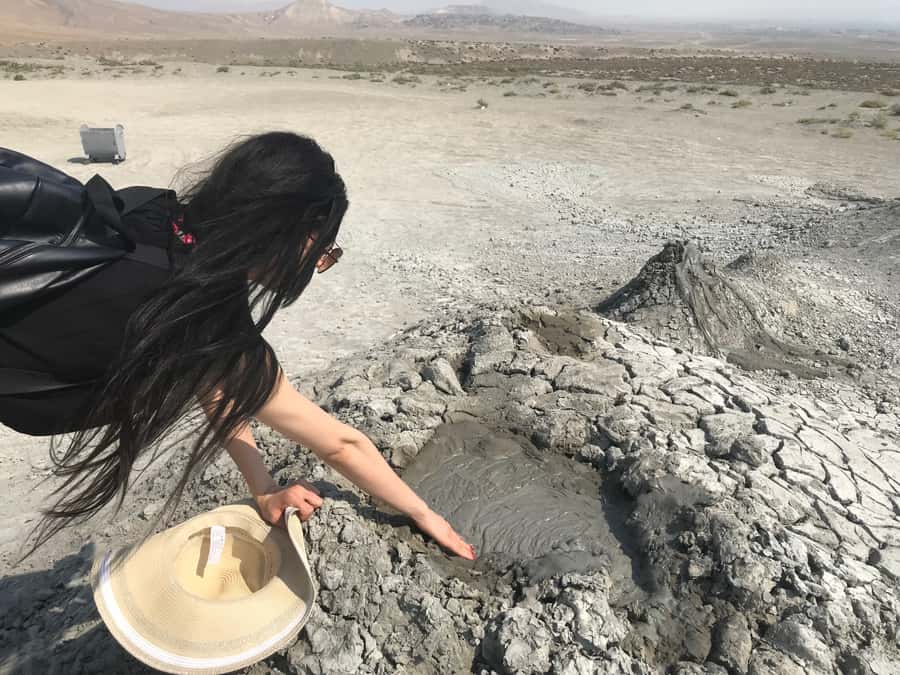
After Gobustan, you head toward the coastal Absheron Peninsula area known for mud volcanoes. The tour plan includes time for guided sightseeing at the mud volcano area, with viewing time around 20 minutes.
Here is the practical truth: mud volcanoes are not a zoo show. Eruptions can be quiet or dramatic depending on timing and conditions. That is why short viewing time is less of an issue here. You are there to witness something unusual, not to catch a perfectly scheduled performance.
Plan on the fact that they may skip this stop on rainy days. Safety comes first, and that does affect the day’s flow.
If you get lucky with timing, you’ll see the ground bubble and release mud. One detail worth keeping in mind from past experiences: getting closer can sometimes involve rougher vehicles, and a couple of groups have mentioned off-road style transport for the volcano approach. Either way, you’ll want sturdy shoes for uneven terrain.
Lunch Break: Eat Local Without Letting It Stall the Day
Lunch is not included. There is a buffet-style stop where you can purchase lunch for about 8-12 USD, and you’ll have enough time to fuel up before the fire stops.
If you’re picky about food timing, this is the one spot where the day can feel a bit “tour-paced.” Keep it simple: pick what you can eat quickly, and save time for photos at Yanardag later.
Also bring a small hydration plan. One piece of feedback that keeps showing up for hot days is to have water on hand. Even if water is sold nearby, it is smarter to start the afternoon comfortably hydrated so you can enjoy the views without rushing.
Ateshgah of Baku: Fire Temple, Fire Worship, and a Still-Visible Meaning
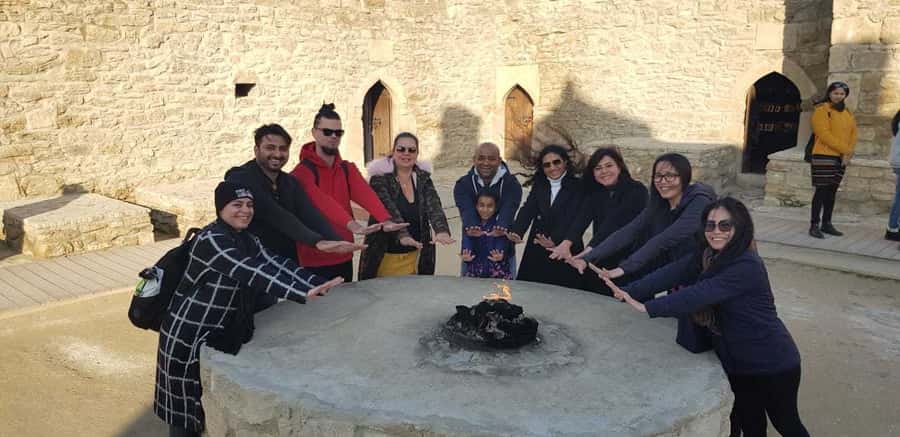
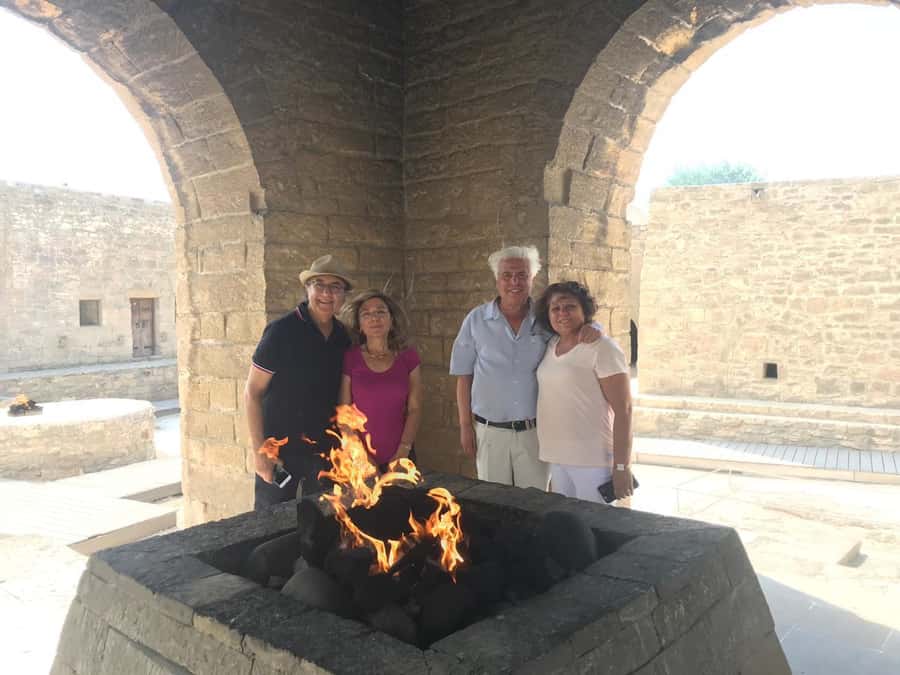
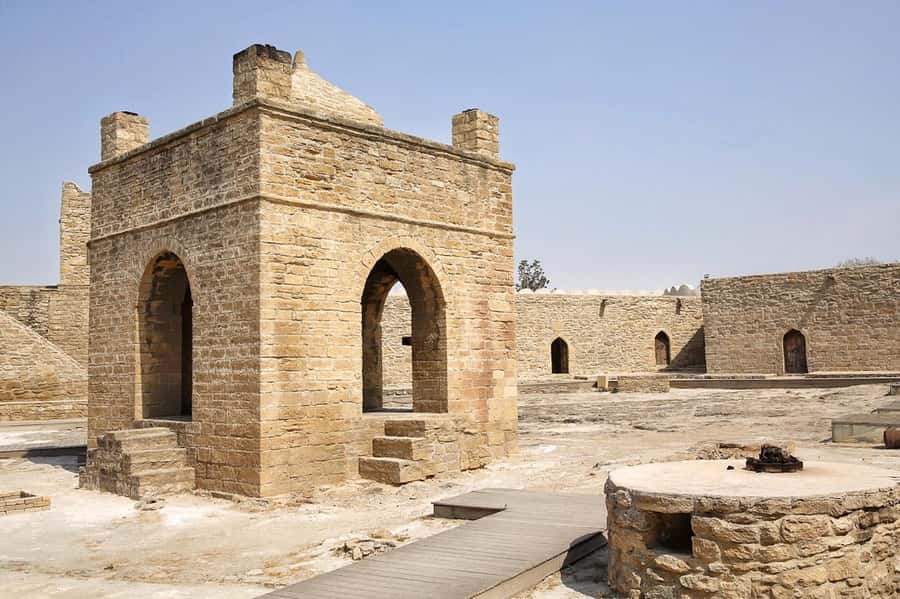
In the afternoon you visit Ateshgah of Baku, a former holy place for fire-worshippers. The time on site is about 40 minutes with sightseeing and a guided explanation.
Ateshgah is one of those places where a guide changes everything. Left on your own, you might see structures and wonder what they represent. With guidance, you understand why fire symbolism mattered to Zoroastrian traditions and how the site functioned as a spiritual destination.
What I find useful: the tour doesn’t treat it like a random stop. It connects it back to the broader “fire” theme that includes Yanardag later.
Drawback to consider: 40 minutes is solid, but it is still a fixed schedule. If you love architecture details, you might wish for more quiet time inside the complex.
Yanardag (Burning Mountain): When Natural Gas Looks Like Magic
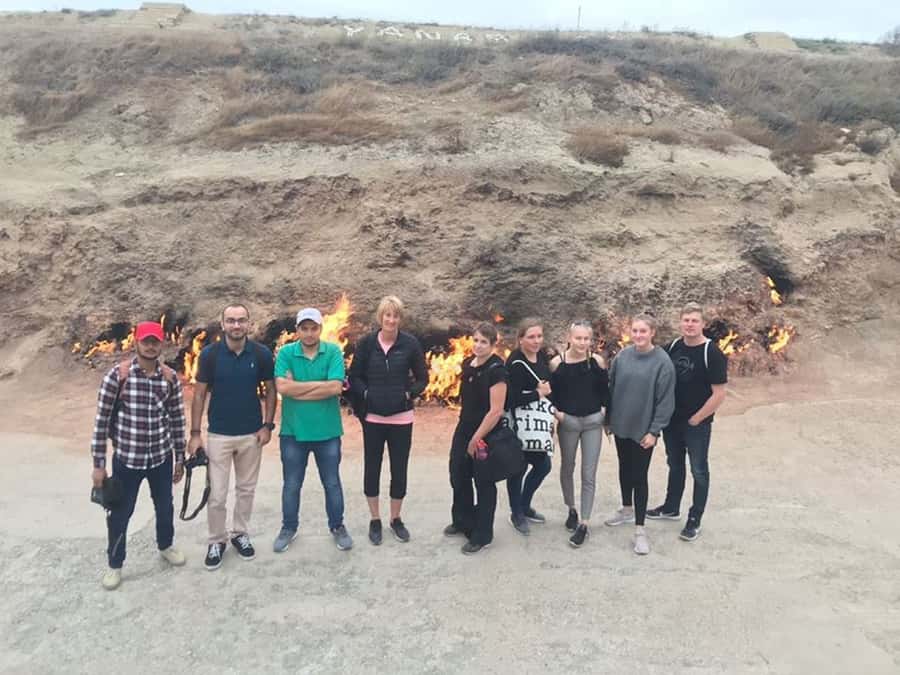
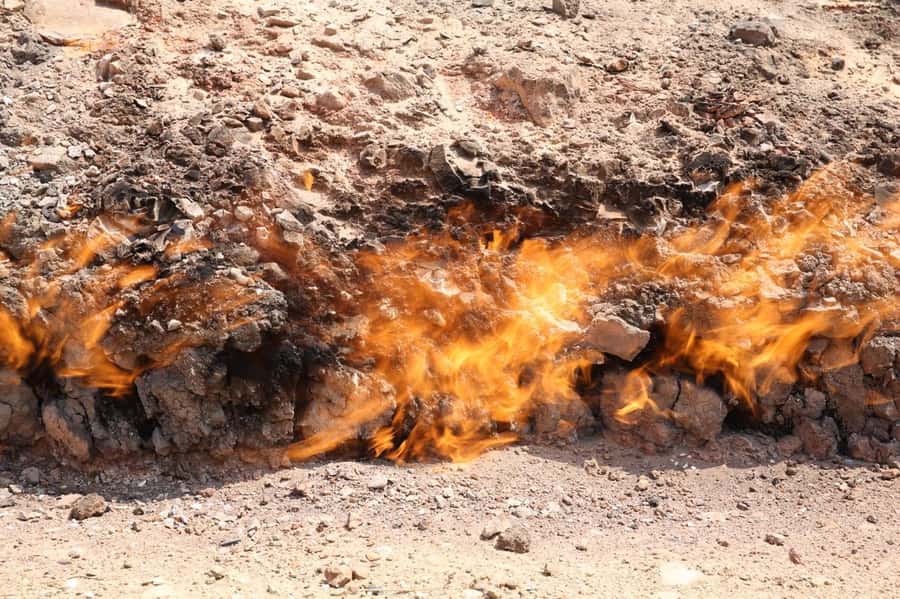
The final highlight is Yanardag, also called the burning mountain. This is a natural gas fire that blazes continuously on a hillside in the Absheron Peninsula area.
The tour includes around 30 minutes here with guided sightseeing. That is the right amount of time because the effect is visual and simple. You want to watch it, take photos, and still have energy left to process what you just learned.
When people describe Yanardag, they usually talk about the feeling more than the mechanics. The practical side is this: you’re outdoors, and the hillside view depends on light and weather. Dress for the conditions, and bring something warm if you’re going in cooler seasons.
If Gobustan is your “human time,” Yanardag is your “living energy.” Together they make the day feel like a coherent story.
Guides and Group Size: Why the Best Part Is the Person Talking
The biggest praise points in this kind of tour tend to be the guide. Names that have come up include Mahabat, Sayed, Elcan, Aqil, Musa, Nazir, Leyla, and Ughur, among others.
Across those experiences, you see the same pattern: clear explanations, good pace control, and guides who answer questions without making you feel rushed. Some guides also help with group photos along the way, which is handy when you want a clean shot with everyone together.
Group type can be private or small groups available, and that can matter for a site like Gobustan where you might otherwise feel swallowed by a crowd. Smaller groups generally make it easier to hear the guide and move at a comfortable rhythm.
Price and Value: What $29 Really Covers
At around $29 per person for a 6-8 hour day, the value is in what you avoid doing yourself. You’re getting:
- Hotel pickup and drop-off
- Transportation between far-flung stops
- A professional guide
- Museum entry and entrance fees if selected
- Skip-the-ticket-line benefits (where applicable)
Lunch is the one extra cost you should plan for. Expect to pay roughly 8-12 USD at the buffet-style restaurant stop.
If you were to do this as DIY, you would likely spend time coordinating transit and pay extra for drivers, plus you might lose the guided framing that makes Gobustan click. For a one-day window, this price often feels like you’re buying interpretation as much as sightseeing.
Photo Tips and Comfort Notes for a Full Day Outside the City
This is a day trip where weather and footwear matter. Gobustan and the mud volcano area involve outdoor terrain. Even the fire sites are outdoors, and wind can change the comfort level quickly.
My practical checklist:
- Wear sturdy shoes for uneven ground around the park and volcano areas.
- Bring layers for Yanardag. You are on a hillside and conditions can shift.
- Carry water, especially if it is warm.
- Use your camera early at Gobustan, then save time for the clearer “fire glow” photos near the end.
If you want the best photos without stress, be ready to follow your guide’s timing. Yanardag and Ateshgah are not places where you want to wander too far off plan.
Should You Book This Baku Gobustan and Fire Temple Day Trip?
Book it if you want one efficient day that covers Gobustan rock art, mud volcano eruptions, Ateshgah, and Yanardag with a guide and no store detours. It is a strong fit for first-timers who want the highlights around Baku without turning the day into logistics.
Skip or rethink it if you are going during a season when rain is likely and seeing mud volcanoes is your top priority, since this stop can be skipped for safety. Also, if you hate structured schedules, this will feel like a full-day itinerary with limited free time at each site.
If you’re the type who likes your sightseeing with explanations, and you enjoy connecting themes like energy and fire across prehistory to Zoroastrian symbolism, this tour is a solid bet.
FAQ
How long is the day trip from Baku?
The tour runs about 6-8 hours, depending on the schedule and season.
What sites are included in the day plan?
You’ll visit Bibi-Heybat (about 30 minutes), the Gobustan National Park Museum (about 1 hour), a mud volcano stop (about 20 minutes), Yanar Dag (about 30 minutes), and Ateshgah of Baku (about 40 minutes).
Is lunch included?
No. Lunch is available at a buffet-style restaurant stop, and you can purchase it for about 8-12 USD.
Do you make shopping stops?
This is a no shopping stop tour, focused on the main historical sites rather than store stops.
What happens if it rains?
On rainy days, the mud volcano stop may be skipped for safety reasons.
What languages are available for the guide?
The tour offers live guides in English and Russian.
More 1-Day Tours in Baku
- Baku: Guided Day Trip to Gabala with Hotel Pickup & Drop-off★ 4.7 · 139 reviews
- Baku : Gobustan, Absheron Sights Guided Day Trip Lunch included★ 5.0 · 120 reviews
- Full Day Trip in Baku (Gobustan & Absheron)★ 5.0 · 72 reviews
- Lankaran – Lerik Day Trip★ 5.0 · 30 reviews
Latest additions around Baku


Gobustan Petroglyphs & Mud Volcano Trips, compared.
Gobustan, Mud Volcano, Fire Mount, Temple Lunch Entry
Read our review →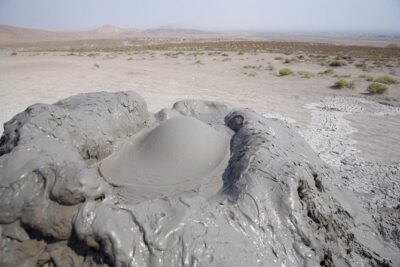
BEST Gobustan, Volcanoes & Absheron Fire Tour (Group or Private)
Read our review →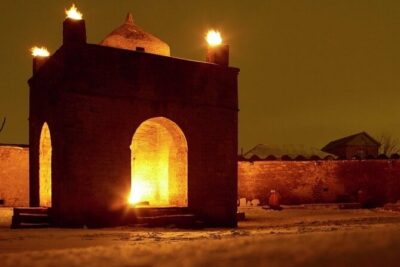
Gobustan & Mud, Fire Temple, Burning Mountain (Group & Private)
Read our review →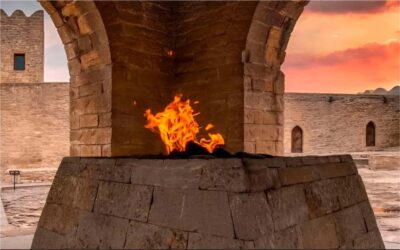
Gobustan-Mud Volcan-Fire Temple and Mountain Tour/Entrance inc
Read our review →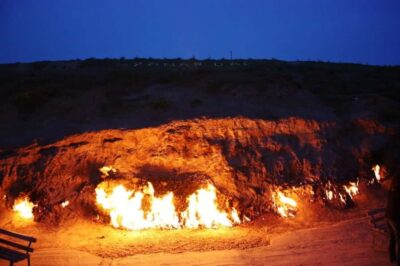
Gobustan Mud Volcanoes Temple & Entry tickets included
Read our review →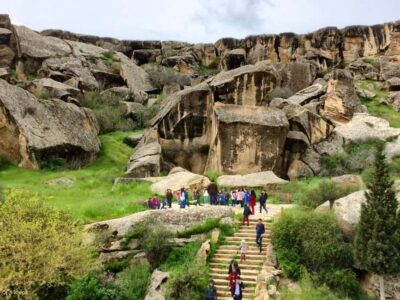
Gobustan-Absheron Tour with Hotel PICK UP and DROP OFF
Read our review →Browse the lists this tour appears in