
Reviewed · WALKING TOURS
Baku: Inner City Walking Tour.
Baku’s Old City turns a walk into a lesson. I love how this route links UNESCO sites with everyday street life, and how the fortified setting makes the architecture easy to understand, not just admire. My one heads-up: the streets are narrow and the pace is walking-focused, so plan around your comfortable shoes and a day without large bags.
You start in Icheri Sheher (Inner City) and end at World Heritage Shirvanshakh’s Palace, with some of Baku’s most recognizable historic landmarks in between. Expect frequent “wow, that’s why it’s there” moments, including Paired Fortress Gates, the Maiden Tower area, and the Two-Storeyed Caravanserai of Shah Palace. A private group also means you can ask questions as you go, but it also means the schedule is exactly what the guide built it to be.
This tour is built for people who like real urban texture: stone walls, courtyards, craft shops, and viewpoints where the city looks layered. You’ll also get a practical little taste at the end with local tea and sweets. If you want a relaxed hop-on hop-off plan with lots of time off the street, this is not that kind of day.
In This Review
- Key moments to look forward to
- First steps in Icheri Sheher, where Baku feels built to defend itself
- The Paired Fortress Gates, your shortcut to understanding the whole Old City
- World Heritage Maiden Tower: outside views first, optional entry if the timing works
- Shah Palace Two-Storeyed Caravanserai: architecture that explains travel and trade
- House with a Chain: a quick story stop that breaks up the fortress feeling
- Art studio time: color, creativity, and a break from pure stone
- Bazar Square viewpoints, bathhouses, and the Mugam Club stop
- Carpets and souvenirs: why the shop stops feel more meaningful here
- Sun clocks and earthquake-proof thinking: architecture that teaches you how people adapted
- Shirvanshakh’s Palace at the end: your payoff at the UNESCO finish line
- Tea and sweets at Balli Boutique: the easy local finish
- Price and value: what $60 buys you in real terms
- Who this Baku Inner City tour suits best
- Should you book this Inner City walking tour?
- FAQ
- How much does the Baku Inner City walking tour cost?
- How long is the tour?
- Where does the tour start and where does it end?
- What is included in the price?
- What is not included?
- What languages are the guides?
- Do I need to bring anything?
- Are there any restrictions on luggage?
- Is the tour wheelchair accessible?
- Is there a cancellation window?
Key moments to look forward to
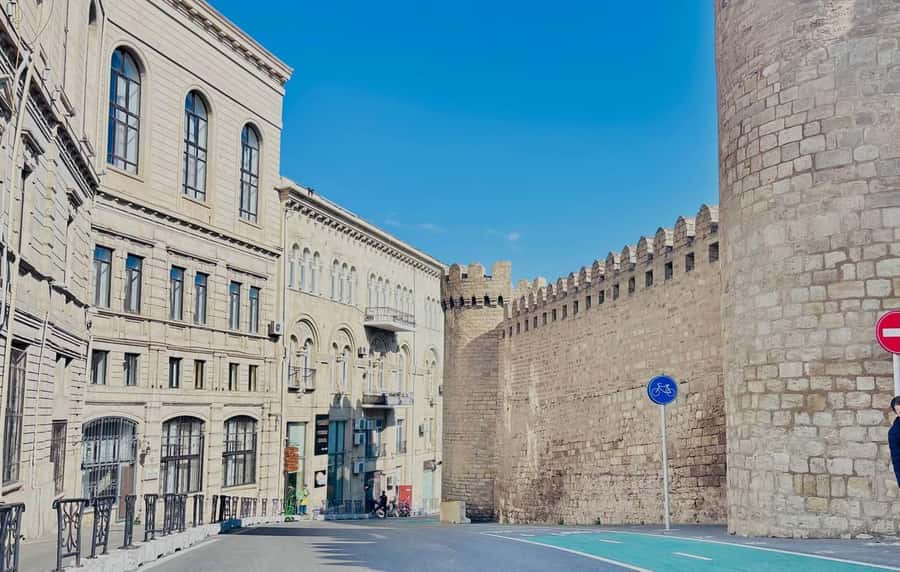
- Paired Fortress Gates and the fortress logic behind Baku’s Old City
- Maiden Tower area views, with a chance to step inside depending on wishes
- Shah Palace Two-Storeyed Caravanserai for photo-friendly architecture and craft vibes
- House with a Chain, a 19th century stop that adds local storytelling flavor
- Carpet and souvenir shops that show how trade still lives in the streets
- Tea and sweets at Balli Boutique to close the walk on a local note
Walking tours in Baku to compare:
- Baku: Stunning Walking Tour of Historical and Modern City
★ 4.9 · 270 reviews - Baku Oil Heritage & Old Town Walking Tour
★ 5.0 · 232 reviews - Baku Walking Tour (Old City)
★ 5.0 · 127 reviews
First steps in Icheri Sheher, where Baku feels built to defend itself
Icheri Sheher is one of those places where you understand history with your feet. You are walking inside a walled, strategic part of town, shaped like an amphitheater on a hill, with the sea exposure in the lower area and the Caucasus Mountains pressure point to the upper side. The Old City didn’t exist just to look pretty. It was built to protect a city that was growing and, at the same time, vulnerable.
Your guide sets this up quickly with a key idea you keep seeing in the stones: there is no city without a fortress. That’s not just a slogan. It explains why you keep running into fortification elements, why the walls matter, and why certain angles and entrances feel so intentional.
Two things make this start especially satisfying. First, the route is structured so you see the fortress as a system, not as disconnected monuments. Second, the streets are narrow labyrinths, so the city rhythm changes every few minutes. One turn gives you a new façade or gate, and suddenly you’re looking at architecture with context.
The Paired Fortress Gates, your shortcut to understanding the whole Old City
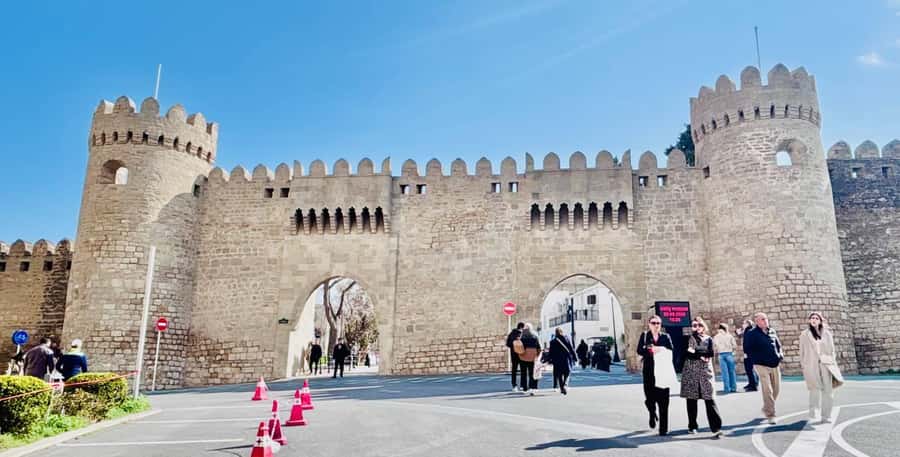
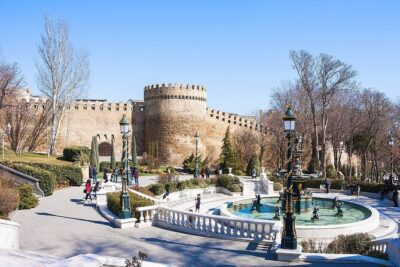
Early on, you’ll focus on the Paired Fortress Gates of Baku Inner City. Gates are where defense meets control. They are the points where movement gets filtered, where attackers are forced into predictable paths, and where defenders can observe and respond.
What I like about this stop is the way it “teaches” without lecturing. You’re not just taking pictures of an old doorway. You’re learning why the Old City’s builders cared about layers and approach angles. The Old City is described as having a triple row of fortress walls, and that idea becomes easier to visualize once you’ve watched how gates connect to the surrounding structures.
Practical note: gates and fortifications often sit in areas where the crowd flow tightens. Wear shoes you can trust, and don’t count on wide sidewalks or flat surfaces. If you’re bringing a camera, you can get strong framing here because the architecture naturally creates depth.
World Heritage Maiden Tower: outside views first, optional entry if the timing works
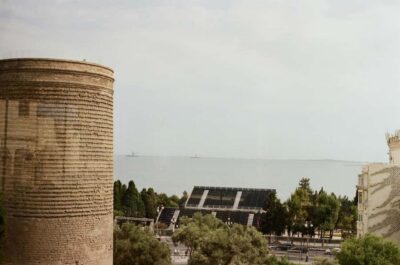
Next, you shift into the area around Maiden Tower, a World Heritage landmark. Even when you’re only viewing it from the outside, the tower reads differently because you’re seeing it in relation to the walls and the tight streets that funnel your sightlines.
You have two possible modes here. You’ll get the best view of Bazar Square and the Maiden Tower from outside, and the guide may be able to help with entering as a special wish. That matters because Maiden Tower isn’t just a distant icon. When you can access it, you’re adding a new dimension to your understanding, not only its appearance but also how it functions as part of the historic complex.
If you’re the type who loves structure and design details, this stop is a good fit. If you’re more focused on local life and craft shops, still do it. Maiden Tower is the anchor that makes all the other stops feel like they belong to one place, not random highlights.
Baku tours and day trips to compare:
- Baku: Gobustan, Mud Volcano, Fire Mount, Temple Lunch Entry★ 4.9 · 3,246 reviews
- Baku: Guba, Shahdag, Laza & Lunch w/ Free City & Night Tour★ 4.8 · 1,455 reviews
- BEST Gobustan, Volcanoes & Absheron Fire Tour (Group or Private)★ 5.0 · 1,254 reviews
- Gobustan and Absheron tour (All inclusive)★ 5.0 · 1,014 reviews
Shah Palace Two-Storeyed Caravanserai: architecture that explains travel and trade
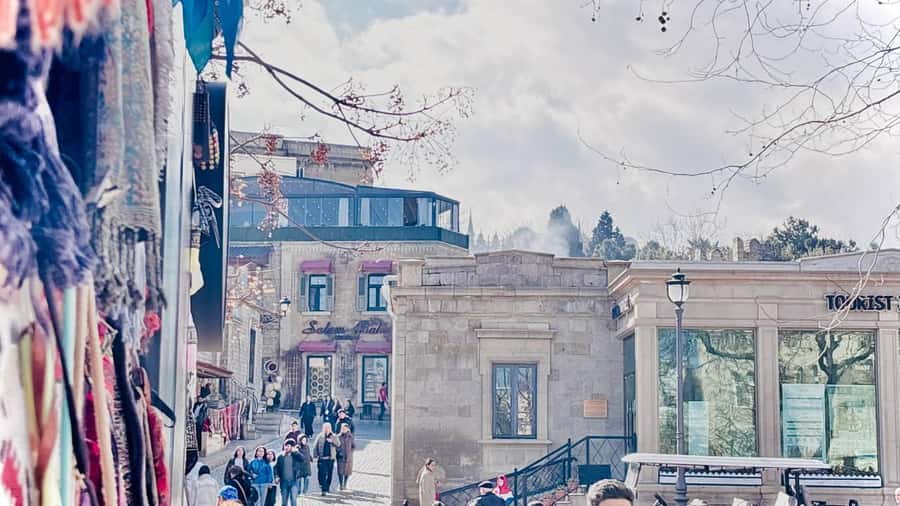
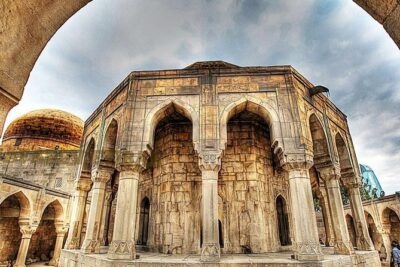
One of the most memorable parts of this walk is the Two-Storeyed Caravanserai, Shah Palace. Caravanserais were built for travelers and merchants, basically early hubs where people could rest, trade, and regroup. In a city that has fortress walls, caravanserais also had a security role, since visitors and goods needed management.
This is a great stop for photos because the building’s scale and layers make it easier to capture interesting angles even in a small space. And because it’s two-storeyed, you get a sense of how movement and activity could stack vertically.
You’ll also see how this kind of architecture supports culture rather than just surviving as a relic. Sitting in these spaces, you start connecting the dots between Baku’s long trading traditions and the craft market stops later in the day. In other words, the caravanserai isn’t only a building. It’s a clue.
House with a Chain: a quick story stop that breaks up the fortress feeling
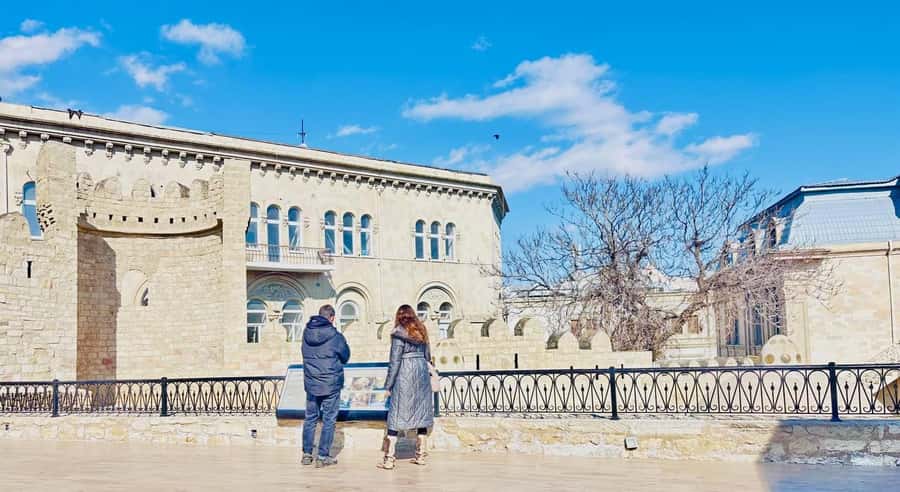
The route includes the House with a Chain, described as a 19th century stop. I like this kind of mid-walk pause because it prevents the day from feeling like a straight line of monuments. Instead, you get a local story element that adds texture to the architecture.
What makes this work on foot is simple: after you’ve been focused on walls, gates, and UNESCO landmarks, you need a human-scale curiosity. A house stop does that. Even if you don’t catch every detail, the point is that Old City architecture includes domestic life and local belief, not only defense and official complexes.
Art studio time: color, creativity, and a break from pure stone
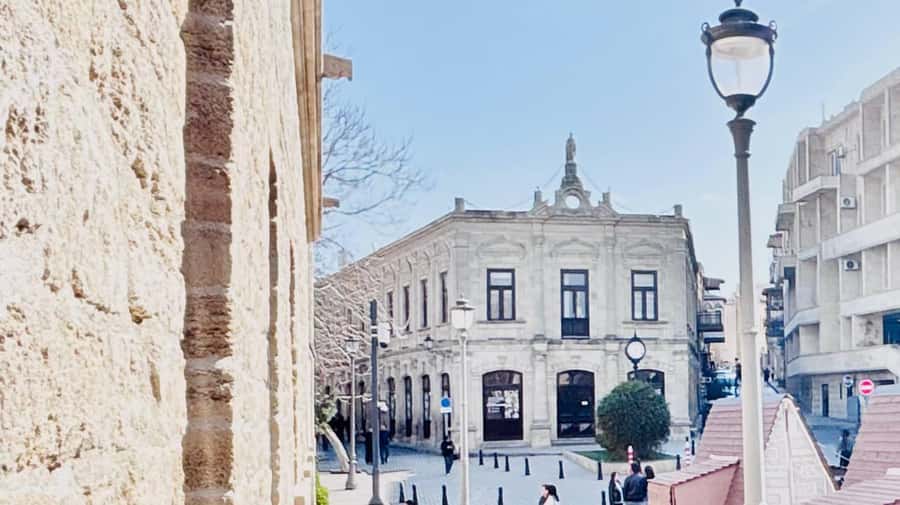
Between major monuments, you’ll enter an Art Studio where you can see lovely, creative paints. This is a smart pacing choice. It changes the sensory mix. Instead of only stone surfaces and hard angles, you get color and hands-on creativity.
This part is also valuable because it connects “old city” to “present day.” If your brain is stuck in historical mode, the studio reminds you that people here still make art in the same cultural space. It doesn’t replace the heritage sites. It gives them a living context.
Bazar Square viewpoints, bathhouses, and the Mugam Club stop
You’ll spend time at Bazar Square, and the description also points to bathhouses and a stop near a Mugam Club restaurant area. Even without going deep into restaurant details, this stop helps you understand what a square is for: gathering, visibility, and everyday movement.
The Maiden Tower view from here is a highlight because the square gives you a wider stage than the tight lanes. You can step back and see how the Old City’s landmark towers sit above street-level activity.
One small practical thing: squares can feel more open, but they still don’t mean smooth walking. You’re moving on historic surfaces, and you might be near stalls or tight corners. Keep your pace steady and save your biggest camera actions for when you have a clear angle.
Carpets and souvenirs: why the shop stops feel more meaningful here
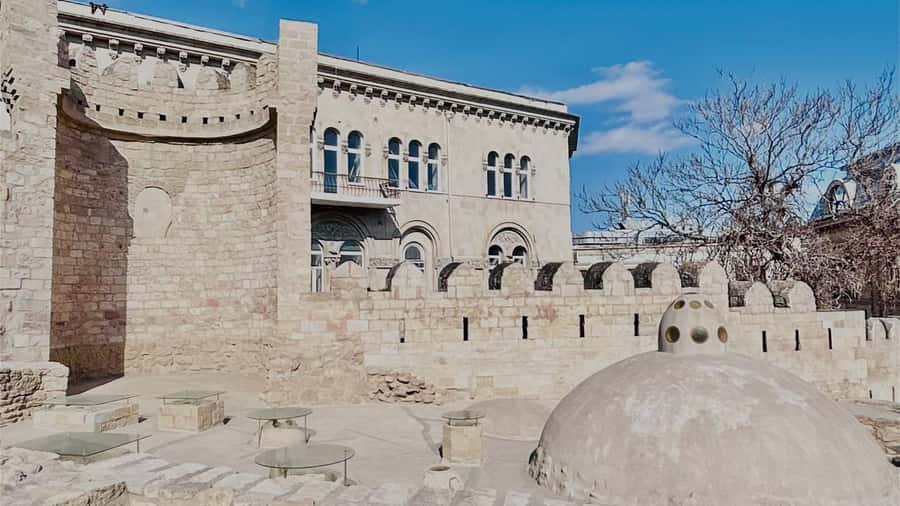
The tour includes time for carpet and souvenir shops inside the Inner City. This is not a generic shopping stop. The idea is that Baku’s long trading traditions still show up in what you can buy today, including special local products.
You’ll get a specific focus on carpets, including the claim that you’ll see one of the best carpets. Whether you end up buying or not, this is the kind of stop that helps you understand what a product means. A carpet is not just decoration. It’s pattern, craft skill, and cultural design language built over time.
If you do buy something, do it with your hands and eyes, not just your budget. Check the texture and color consistency, and ask about what makes it special. If you are not buying, still treat it like a cultural lesson. Look at the designs, learn how they’re described, and notice how the shopkeepers explain their goods.
Sun clocks and earthquake-proof thinking: architecture that teaches you how people adapted
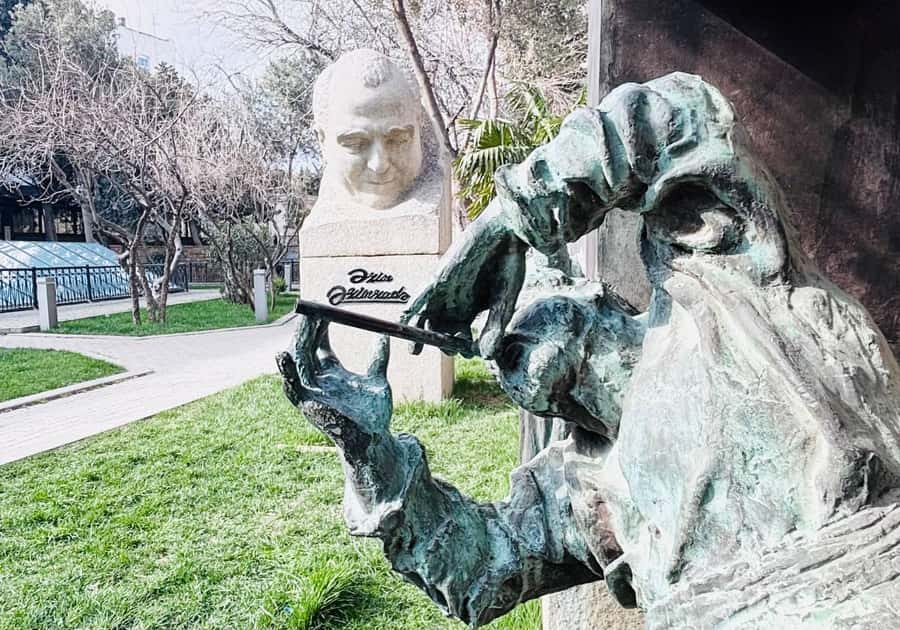
One of the most unique parts of this tour is the focus on sun clocks and the way architecture helps protect people from earthquakes, tied to 12th century building ideas. This is where the day shifts from “look at history” to “understand problem-solving.”
Sun clocks are a great example of practical science. They show how people measured time using the environment. In a world where most timekeeping is on your phone, it’s a reminder that daily life once depended on observing light and shadow.
The earthquake-related architectural point also matters because it reframes old buildings as engineering, not only style. Even without getting technical, you’ll start seeing heritage structures as systems designed for survival. That makes you look at walls, shapes, and layouts with a different mindset.
Shirvanshakh’s Palace at the end: your payoff at the UNESCO finish line
You end at World Heritage Shirvanshakh’s Palace complex. Finishing here makes sense because the palace is a political and cultural statement, and by the time you arrive, you’ve already built context through fortifications, towers, gates, and merchant infrastructure.
What you should expect is a change in scale and mood compared to the tight lanes you started in. Palaces typically feel more formal, more layered in function, and more designed for authority. And because this is a palace complex tied to UNESCO, your guide’s “what to notice” style helps you see beyond the obvious.
You might also hear the guide connect this stop to “oracle lines” and other architectural or ceremonial ideas from the complex description. Don’t worry if it goes over your head at first. The point is that the guide is pointing you toward lines, patterns, and viewpoints so you can read the space as intentional, not random.
Tea and sweets at Balli Boutique: the easy local finish
At the end, you’ll taste local Azerbaijani tea and sweets at Balli Boutique. This matters more than you might think. A walking tour can end with fatigue, and a simple, local tasting resets your energy while keeping the day anchored in everyday culture.
The best part is that it turns the last steps of the tour into a gentle landing. Instead of rushing out to find your own snack, you close with something local that fits the historic day you just completed.
Price and value: what $60 buys you in real terms
The price is $60 per person for a 1 day Old City walking experience. That’s not the cheapest way to see Baku’s highlights, but it also isn’t overpriced if you judge it by guidance quality and site logic.
Here’s what you’re really paying for:
- A specialized bilingual guide in English and Russian, which matters because you’re dealing with UNESCO sites and architecture where context changes everything.
- A structured route that strings together two World Heritage elements plus related historic stops, so you are not bouncing around randomly.
- Included basics like a bottle of water and local chocolate, which is a small comfort when you’re moving for hours.
- A private group format, which tends to make it easier to ask questions and keep the pace aligned with your walking comfort.
What you should plan for, based on what’s not included: entrance tickets are not included, and food and drinks beyond the tea and sweets are not included. So if you want to step inside additional areas beyond what’s covered, budget for that and keep some cash or a card handy.
For value, I’d say this is best if you want interpretation, not just photos. If your goal is a quick selfie route, you might pay more guide value than you use. But if you like understanding fortifications, caravan trade, and how UNESCO spaces connect, $60 feels reasonable.
Who this Baku Inner City tour suits best
This tour is a strong match for you if:
- You like walking and can handle narrow Old City streets.
- You care about architecture and want context for what you’re seeing.
- You want a route that moves through fortress gates, Maiden Tower area views, and Shirvanshakh’s Palace as a coherent story.
- You prefer a private group so your guide can respond to your questions.
It might be less ideal if:
- You want long breaks away from the streets.
- You need large bags stored on the spot, because luggage or large bags are not allowed.
- You expect a car-based tour with frequent stops for comfort, since this is designed around walking.
Should you book this Inner City walking tour?
Book it if you want the fast track to understanding Baku’s Old City by walking it in a smart order. This route connects fortress defenses to trading spaces and ends at Shirvanshakh’s Palace, so you’re not collecting landmarks, you’re learning how the place works.
Skip it only if your main goal is minimal walking or you don’t care about interpretation. In that case, you might be happier with a self-guided stroll.
If you do book, go in with two priorities: good shoes, and curiosity. When you pair the fortress logic with the UNESCO landmarks, the day clicks, and you’ll leave with far more than a set of photos.
FAQ
How much does the Baku Inner City walking tour cost?
It costs $60 per person.
How long is the tour?
The duration is 1 day.
Where does the tour start and where does it end?
It starts in Baku Inner City and ends at World Heritage Shirvanshakh’s Palace.
What is included in the price?
The tour includes a specialized bilingual guide, plus a bottle of water and local chocolate.
What is not included?
Entrance tickets, food and drinks (other than the included tea and sweets), hotel pickup and drop-off, and private transport are not included.
What languages are the guides?
The tour is guided in English and Russian.
Do I need to bring anything?
Bring comfortable shoes for walking.
Are there any restrictions on luggage?
Luggage or large bags are not allowed.
Is the tour wheelchair accessible?
Yes, it is wheelchair accessible.
Is there a cancellation window?
You can cancel up to 24 hours in advance for a full refund.
Latest additions around Baku



Walking Tours, compared.
Stunning Walking Tour of Historical and Modern City
Read our review →
Baku Old City Wonders: A Walking Tour Through Time
Read our review →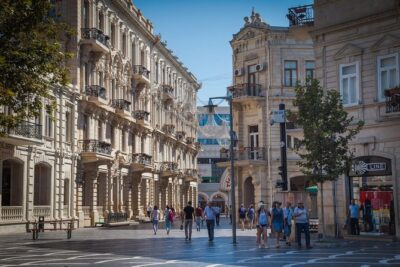
Browse the lists this tour appears in