
Reviewed · GOBUSTAN PETROGLYPHS & MUD VOLCANO TRIPS
Baku: Gobustan, Mud Volcanoes, Fire Temple, & Yanar Dag Tour
Fires, mud, and ancient carvings in one day. I love the contrast between Gobustan Rock Art and the never-ending Yanar Dag flame, and this route also gives you mud volcano scenery plus a real fire-temple lesson on how people made meaning from natural gas. The main catch is that several key stops require separate entry tickets and at least one fee is cash-only.
This trip can feel either smooth and educational or a bit hectic, depending on the guide and the day’s pacing. I’ve seen how strong guides like Vahid can turn these sites into a clear story, while another guide name, Aqil, came with complaints about rushing and weaker English. Also, do a quick check on vehicle cleanliness, because one account flagged dirty windows that made viewing harder.
In This Review
- Key highlights worth showing up for
- Gobustan National Park: UNESCO rock art and the stories carved into stone
- Mud volcanoes near Baku: the short drive to a science lesson you can smell
- Ateshgah Fire Temple in Surakhany: why a pentagonal complex became a meeting point of faiths
- Yanar Dag Burning Mountain: a natural gas fire that refuses to quit
- Price and tickets: how to plan your budget without surprises
- Timing and the flow from pickup to fire, mud, and back to Baku
- What to pack, what to expect, and who this tour fits best
- Should you book this Baku fires and mud day trip?
- FAQ
- Are the entry tickets included in the base price?
- How much is the mud volcano fee, and does it change in the rain?
- What does the Yanar Dag stop feel like?
- How long is the tour experience?
- What language is the guide?
- What should I bring or avoid during the tour?
Key highlights worth showing up for
- Gobustan’s UNESCO rock art, with carvings dated about 5,000 to 20,000 years.
- Mud volcano scale, Azerbaijan has 350 of the world’s 700 mud volcanoes.
- Ateshgah in Surakhany, a pentagonal fire temple linked to Iranian and Indian inscriptions.
- Yanar Dag Burning Mountain, a natural gas fire that keeps burning and releases a distinct gas smell.
- Rain-ready plan, if it rains you visit the Mud Volcanoes Complex, and the 25 AZN mud-vehicle fee still applies.
Ateshgah and Yanardag fire trips to compare:
- BEST Gobustan, Volcanoes & Absheron Fire Tour (Group or Private)
★ 5.0 · 1,254 reviews - Gobustan and Absheron tour (All inclusive)
★ 5.0 · 1,014 reviews - Baku: Gobustan, Volcanoes, Fire Temple and Yanardag Day Trip
★ 4.7 · 433 reviews
Gobustan National Park: UNESCO rock art and the stories carved into stone
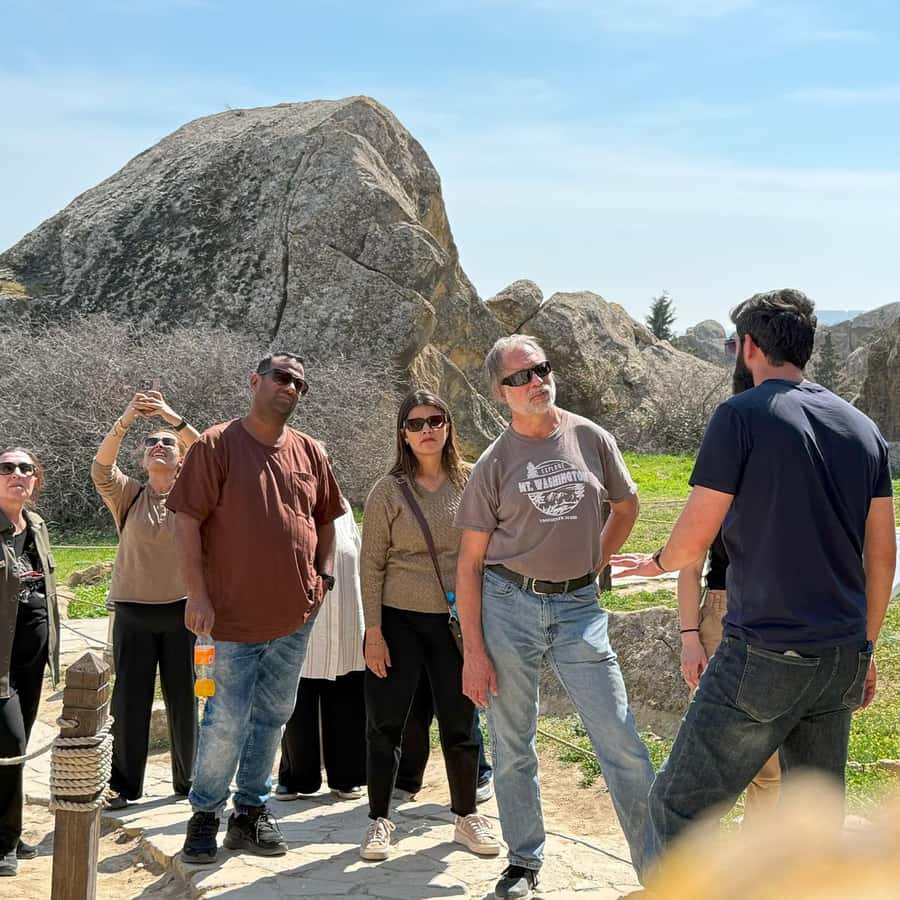
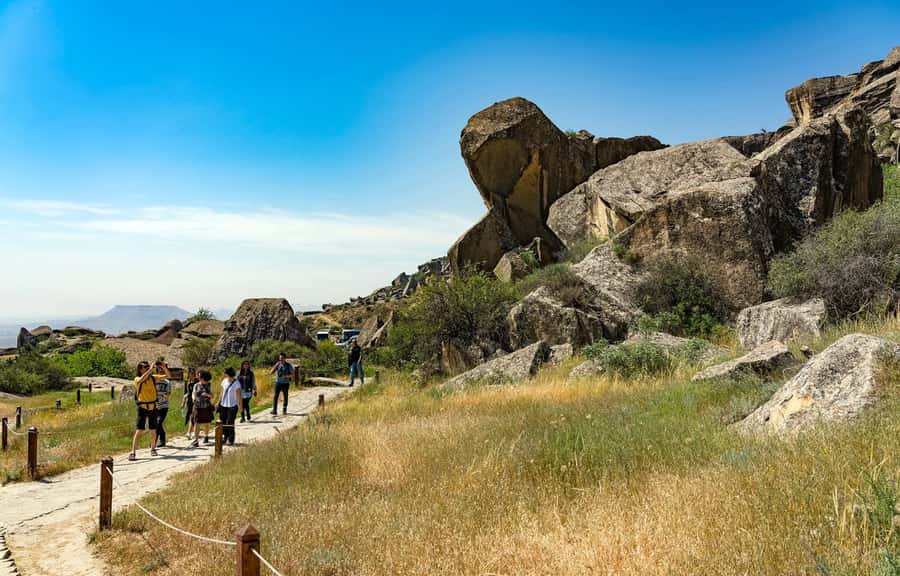
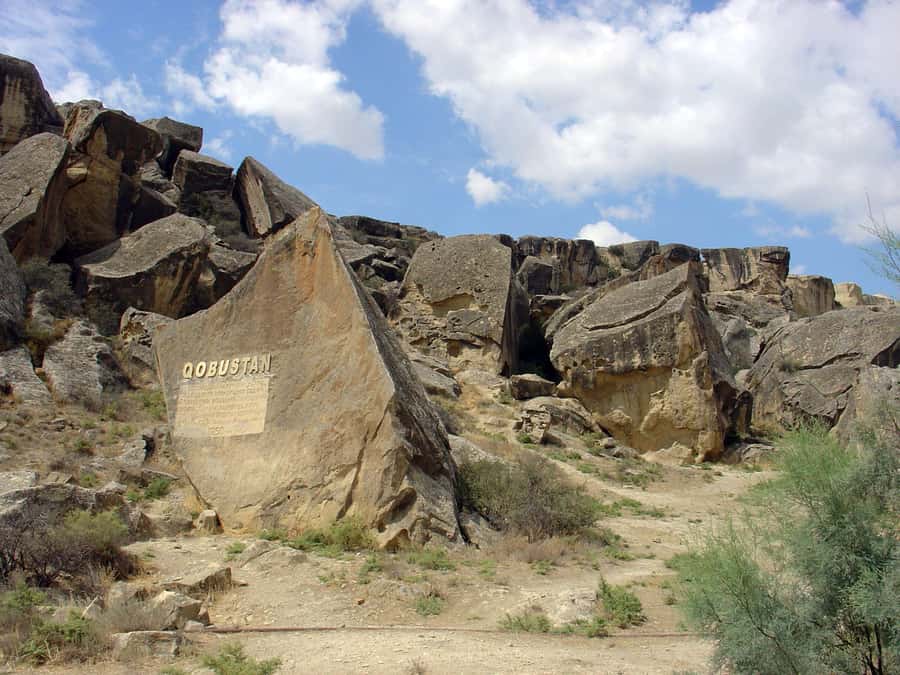
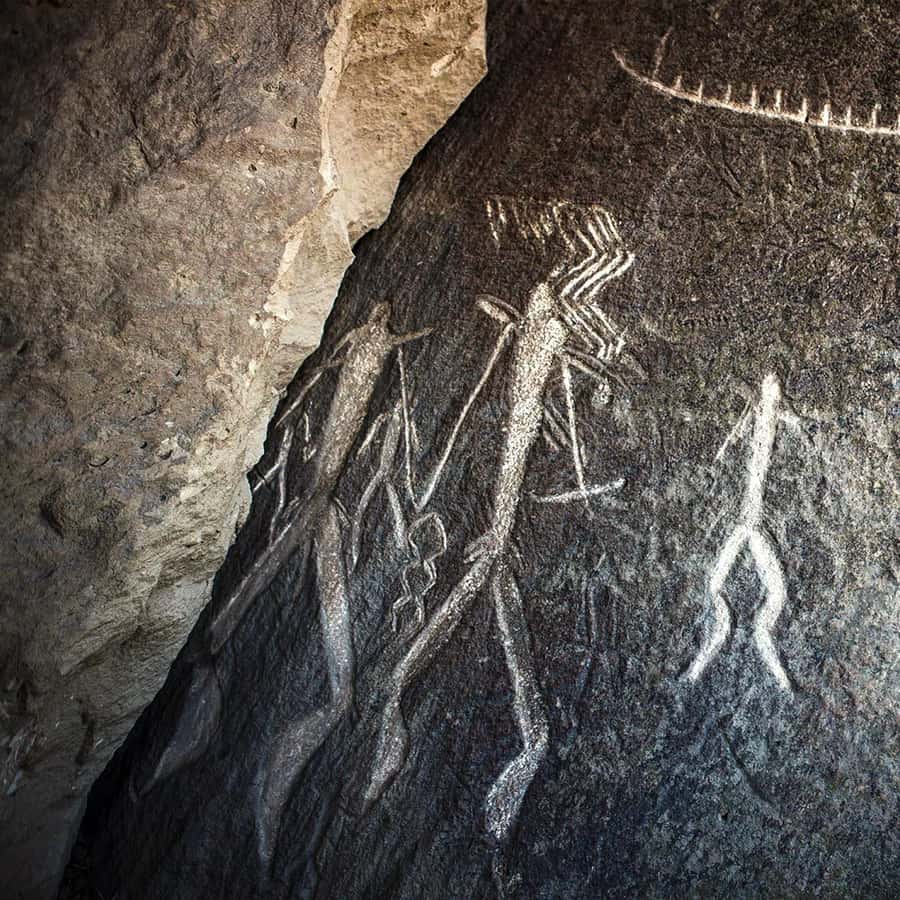
The best way to understand Gobustan is to treat it like an open-air archive. You come for the famous rock faces, but the real payoff is how the carvings map human life over a huge slice of time, from prehistory into later medieval-era scenes.
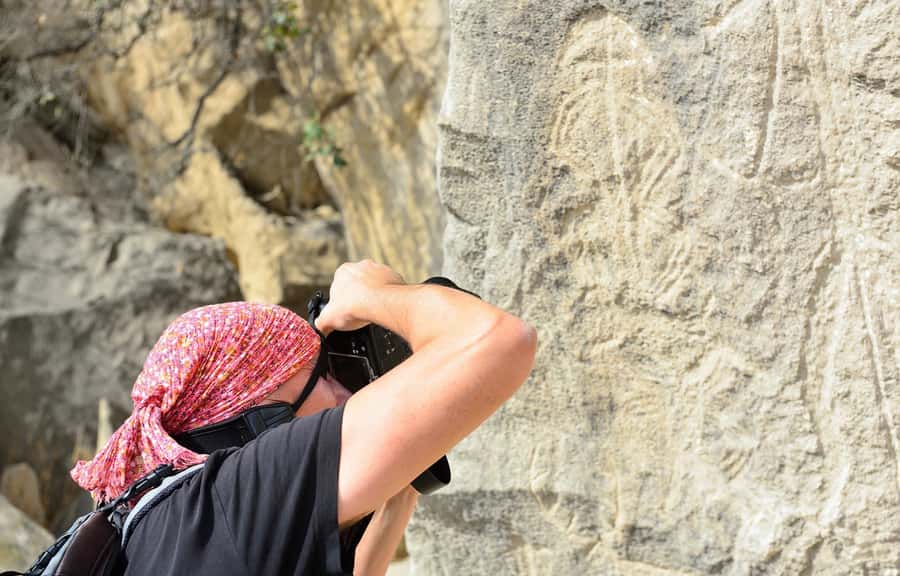
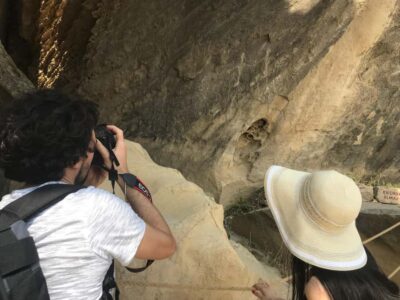
You’ll spend about an hour at Gobustan Rock Art Cultural Landscape, and the focus is on what the rocks depict, not just what they look like. Expect imagery that spans daily survival and organized community life: hunting scenes, stylized animals, people in ritual-like poses, and repeated motifs that help you read the site as more than random marks. You’ll also notice figures that suggest sport and conflict, like bull fights, as well as movement and trade, like camel caravans.
One of my favorite details is the variety of “symbols” beyond animals and people. The carvings include the sun and stars, which gives the whole park a stronger spiritual and observational vibe. It also helps you connect the dots to the other stops later in the day, especially once you reach places where fire and natural phenomena shaped belief.
Practical note: wear shoes you trust. Gobustan is outdoor, and you’ll be walking on uneven ground while looking back and forth between rock faces and interpretive points. A hat and sunscreen matter here because the sun near Baku can be sharp, even if you don’t feel it immediately.
Mud volcanoes near Baku: the short drive to a science lesson you can smell
The mud volcano stop is quick on the clock, about 20 minutes, but it’s worth the stop because it’s one of those Azerbaijan experiences that feels more physical than scenic. Mud volcanoes are not like the dramatic, lava-spewing volcano stereotypes people carry in their heads. Here, you’re seeing eruptions and surface activity related to the country’s geology, and it comes with a distinctly local character.
The tour emphasizes how concentrated this phenomenon is in Azerbaijan. The numbers given are big: Azerbaijan has 350 of the world’s 700 mud volcanoes. That single fact changes how you see the country. Instead of thinking of mud volcanoes as a rare curiosity, you start treating them as part of the regional identity.
There’s also a logistics piece you should plan for. The mud volcano visit uses off-road cars, and that fee is mandatory and collected at the start: 25 AZN cash. If it rains, the route still keeps the same fee, but the tour visits the Mud Volcanoes Complex instead. So, if your schedule is tight, be realistic about the weather and bring water, keep your phone protected, and expect different ground conditions than you’d get on a dry day.
Because the time at the mud volcanoes is short, I’d use the minutes actively:
- Look first, then read labels.
- Take a photo, then step slightly to compare viewpoints.
- If the air smells strong, don’t panic. It’s part of the experience you came for.
Ateshgah Fire Temple in Surakhany: why a pentagonal complex became a meeting point of faiths
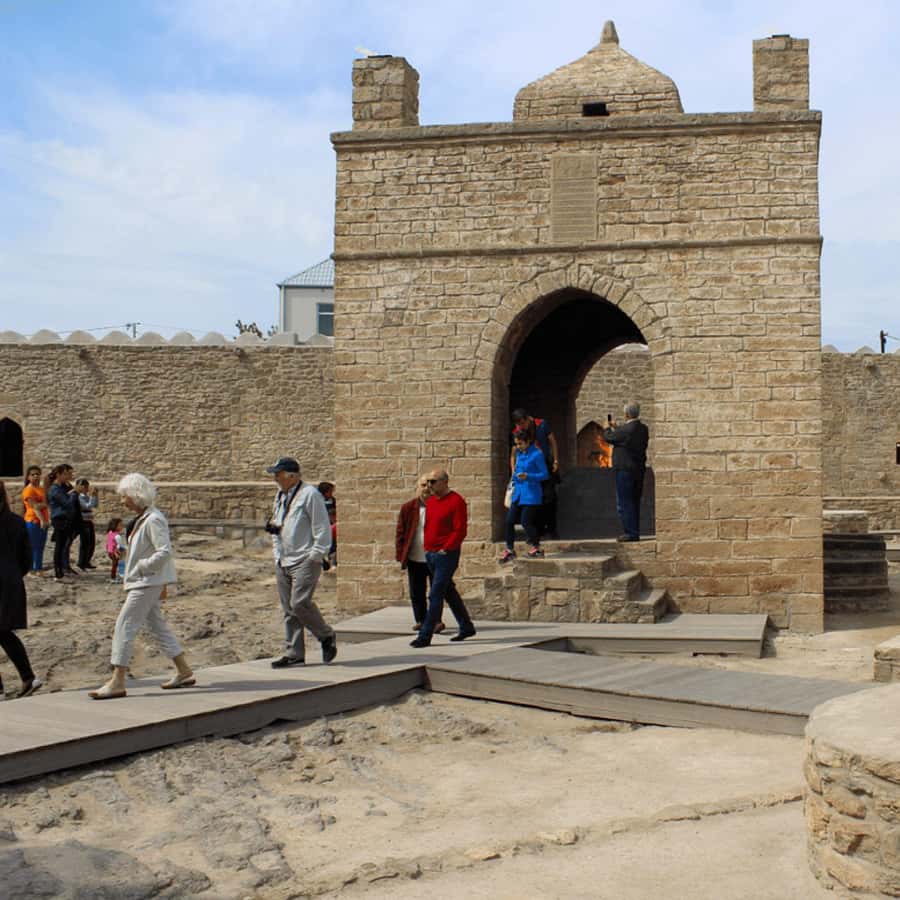
Ateshgah is the kind of site where your brain has to switch gears. One moment you’re outside, reading ancient stone art. The next, you’re at a castle-like religious complex built for worship and ritual.
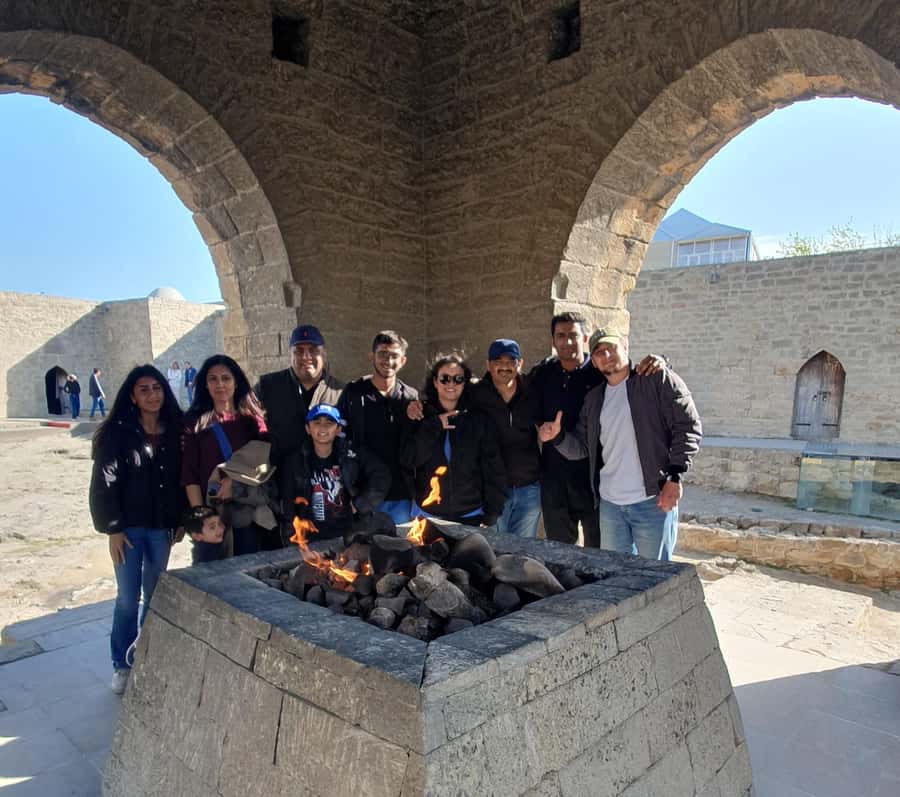
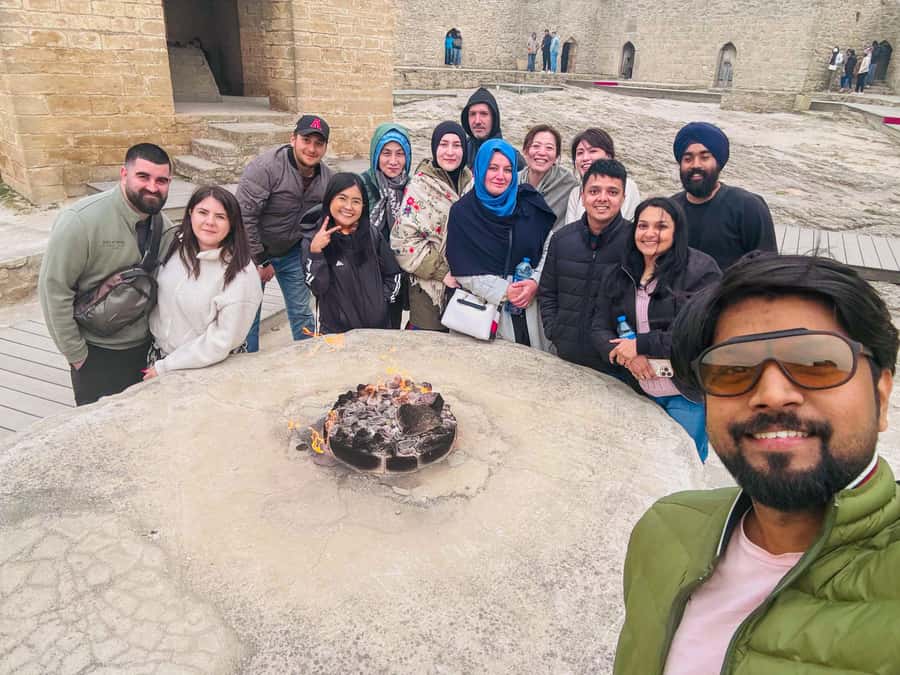
This stop is about 45 minutes, and it’s structured around how the temple functioned. It’s located in Surakhany town, and it’s often called the Fire Temple of Baku. The most useful idea to carry into your visit is that it was not only one faith in one era. Based on Iranian and Indian inscriptions, the temple was used as a place of worship for Hindus, Sikhs, and Zoroastrians.
The complex itself has a clear layout. It’s described as a pentagonal structure with a courtyard surrounded by cells for monks, and an altar positioned in the middle. Even if you’re not religious, that layout communicates purpose: space for gathering, space for residents or caretakers, and space for an altar where the focus of attention mattered most.
Here’s the timeline detail that makes Ateshgah more than a photo stop. The complex dates to the 17th and 18th centuries, and it was abandoned in the late 19th century, likely because the Indian population in the area dwindled. Then, the natural flame story becomes the bridge to the final stop of the day.
Ateshgah’s flame went out in 1969, after nearly a century of using petroleum and gas from the area. Today, the flame is lit by gas piped from the nearby city. That is a big deal. It means the site shows belief, then it shows change, and finally it shows preservation in a practical modern way.
Wear breathable layers. You’ll be inside parts of the complex and outside parts, and the air can shift.
Gobustan petroglyph and mud volcano trips to compare:
- Baku: Gobustan, Mud Volcano, Fire Mount, Temple Lunch Entry★ 4.9 · 3,246 reviews
- Gobustan & Mud, Fire Temple, Burning Mountain (Group & Private)★ 4.5 · 418 reviews
- Baku: Gobustan Absheron Tour Entry Tickets included★ 4.9 · 329 reviews
- Gobustan-Mud Volcan-Fire Temple and Mountain Tour/Entrance inc★ 5.0 · 267 reviews
Yanar Dag Burning Mountain: a natural gas fire that refuses to quit
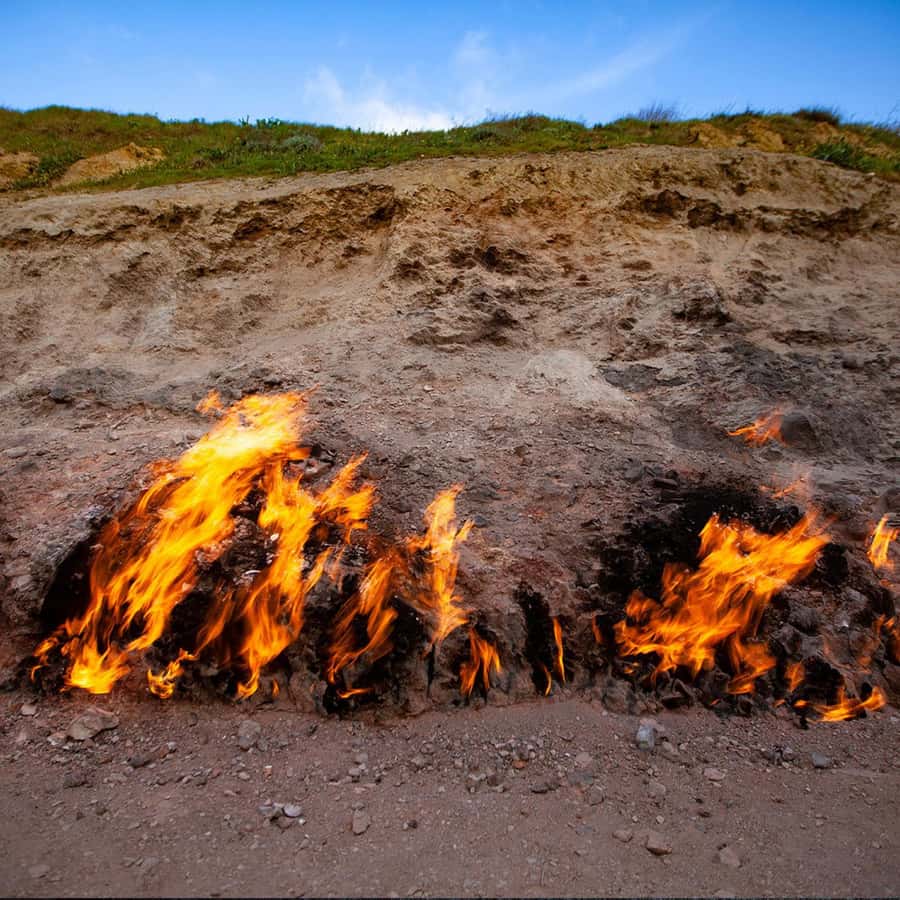
If Gobustan feels like time travel and Ateshgah feels like faith and architecture, Yanar Dag feels like nature doing its own thing. It’s a natural gas fire on the Absheron Peninsula near Baku, and it’s described as never being extinguished.
This is one of the most memorable stops because it’s not something you can imagine into existence. Flames jet about 3 meters into the air from a thin, porous sandstone layer. The vents rise through sandstone formations, and at the base of a 10-meter-wide scarp below the hillside, flames are described as reaching around 10 meters.
And yes, you should expect smell. Around this open fireplace, the air can be filled with the gas scent, and that alone makes it different from any museum-like fire display. It also helps explain why people historically connected natural gas to fire worship and ritual life.
Your time here is about 20 minutes, so don’t rush it. Spend the first minute letting your eyes adjust, then take one set of photos from where you can see the flame height clearly. After that, read any provided context points. The value of Yanar Dag is not just that there’s a flame, it’s that the flame behaves like a natural system, tied to geology rather than a switch.
Price and tickets: how to plan your budget without surprises
The base price is listed as $6 per person, and the tour also includes transport by car and professional guiding. That low starting number can feel like a bargain, until you factor in what’s not included.
The key entry fees are explicitly called out as separate:
- Gobustan Rock Art: 10 AZN
- Mud volcano off-road cars: 25 AZN cash, mandatory at the start
- Ateshgah and Yanardagh: 15 AZN (as listed together)
So, the true cost is base price plus those site fees. The good part is that there are no hidden charges noted. The more practical issue is that you need cash ready for at least one fee, and tickets are not bundled into the base rate unless you pick an option that includes entrance fees.
If you choose the option with Entrance Fees Included, the tour notes a complimentary Baku Old City Tour. That can make the overall deal better if you were already planning to explore central Baku. If you’re the kind of traveler who wants to control your own schedule for the city, you might prefer to skip that bundle, but you’ll still need tickets at the sites.
Also, the booking tool may show a short “duration” figure, but the day itself is clearly a full-day style route from Baku with multiple distinct stops. Plan your day as a true outing, not a quick roadside drive.
Timing and the flow from pickup to fire, mud, and back to Baku
This experience runs as a structured route, with specific time blocks that keep you from wandering too long. Expect:
- About 1 hour at Gobustan Rock Art
- Around 20 minutes at the mud volcano area
- A 1 hour break for lunch in Baku
- About 45 minutes at Ateshgah
- About 20 minutes at Yanar Dag
That schedule matters because it shapes the feel of the day. It’s not a relaxed “hang out and soak it in” kind of pace. It’s more like a curated circuit: learn, look, photograph, move on, repeat.
I actually like this pacing for first-time visitors, especially if you’re short on time in Baku. You get four major experiences that each teach a different idea. But it’s also why you should come prepared to move. If you want long, unhurried time at one site, this may feel tight.
Meeting point is listed as Gosha Gala Gapysy, and you return there at the end.
English and Russian are offered for the live guide. If language clarity is important to you, it’s worth arriving with your questions ready. A good guide will connect the dots across the day, from prehistory rock art to the “eternal flame” theme that shows up again at Yanar Dag.
What to pack, what to expect, and who this tour fits best
Bring the basics the tour calls for, because outdoor sites can turn uncomfortable fast:
- Comfortable shoes
- Hat
- Camera
- Sunscreen
- Water
- Cash (important for the 25 AZN mud-vehicle fee)
- Optional: credit card can help for parts of the day where you might pay by card, though cash is still key
If you’re sensitive to strong smells, know that Yanar Dag can have a noticeable gas odor. It’s part of the attraction, but it’s also a good reason to plan for a comfortable viewing spot.
The tour is by car, and the start and end points are fixed. You should also know the tour has limits: it’s not suitable for wheelchair users and it’s marked as not suitable for people over 95 years. Pets are not allowed, and smoking and alcohol are not allowed in the vehicle.
Who should book this?
- First-time visitors who want the most famous Absheron-area sights without building a car plan
- Travelers who like learning through guided context, not just looking at buildings
- People interested in how natural gas, geology, and human belief intersect
Who might skip it?
- If you want a very slow, unstructured day with long time at each site
- If you hate any outdoor walking on uneven ground
- If you dislike fixed schedules and prefer to improvise between stops
Should you book this Baku fires and mud day trip?
I’d book it if you want a high-impact day that mixes three big themes: prehistoric human life, earth-driven phenomena, and fire worship shaped by natural gas. The value is strong because the base cost is low, and the route stacks major sights in one outing.
I’d be a bit cautious if you don’t like ticket complexity. You’ll need to pay multiple site fees, and you must bring cash for the mud-vehicle part. Also, because the day is tightly timed, bring patience for movement and make sure your guide is doing a clear job of explaining what you’re seeing.
If you’re the type who likes a guided story and you come prepared with cash, shoes, and sun protection, this is a smart first-day choice from Baku.
FAQ
Are the entry tickets included in the base price?
No. The tour lists base price transport and guiding, but entry tickets are not included for Gobustan National Park, Ateshgah (Fire Temple), and Burning Mountain (Yanar Dag). You must buy them separately if you do not select the entrance-fees-included option.
How much is the mud volcano fee, and does it change in the rain?
The mud volcano off-road cars fee is 25 AZN cash and is mandatory. If it rains, the tour visits the Mud Volcanoes Complex, and the 25 AZN fee remains applicable.
What does the Yanar Dag stop feel like?
Yanar Dag is described as a natural gas fire that never goes out. The flames jet upward from porous sandstone, and the air around the site can smell of gas.
How long is the tour experience?
The booking shows a duration figure of 8 minutes, but the day trip includes multiple stops with set time blocks, including about an hour at Gobustan, a 1-hour lunch break in Baku, time at Ateshgah, and about 20 minutes at Yanar Dag.
What language is the guide?
The tour offers a live guide in English and Russian.
What should I bring or avoid during the tour?
Bring comfortable shoes, a hat, sunscreen, water, a camera, and cash. Smoking, pets, and alcohol or drugs are not allowed, and there are restrictions like no explosive substances and no alcohol in the vehicle.
Latest additions around Baku



Gobustan Petroglyphs & Mud Volcano Trips, compared.
Gobustan, Mud Volcano, Fire Mount, Temple Lunch Entry
Read our review →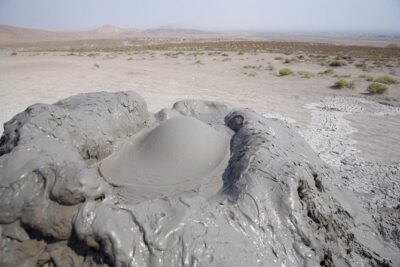
BEST Gobustan, Volcanoes & Absheron Fire Tour (Group or Private)
Read our review →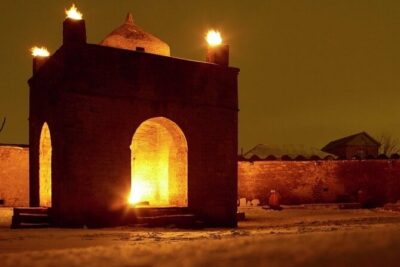
Gobustan, Volcanoes, Fire Temple and Yanardag Day Trip
Read our review →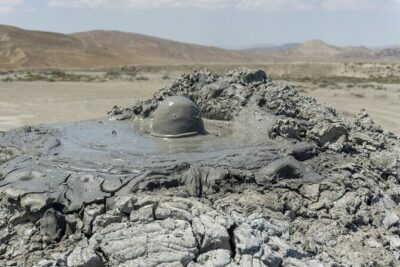
Gobustan & Mud, Fire Temple, Burning Mountain (Group & Private)
Read our review →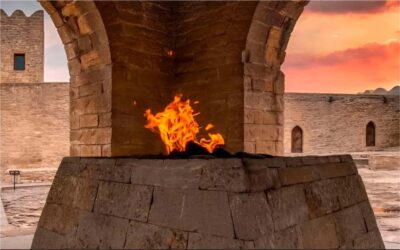
Gobustan-Mud Volcan-Fire Temple and Mountain Tour/Entrance inc
Read our review →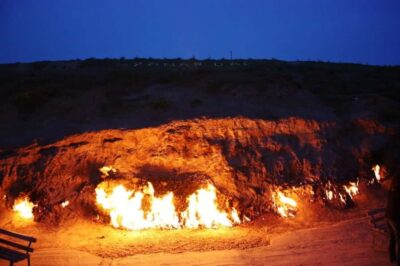
Gobustan Mud Volcanoes Temple & Entry tickets included
Read our review →Browse the lists this tour appears in