
Reviewed · GOBUSTAN PETROGLYPHS & MUD VOLCANO TRIPS
From Baku: Gobustan Half Day Guided Tour
Prehistoric art meets active mud volcanoes. This guided outing strings together Gobustan Rock Art and the mud volcano field, then adds key Baku landmarks like Bibi-Heybat Mosque and the historic first oil well. I like the way the sites connect, from early human expression on stone to Azerbaijan’s later geology and industry.
I also like that you get hotel pickup and drop-off plus private transportation and a professional guide, so you spend less time figuring things out. One consideration: the day runs about 7 hours, and one bad review calls out feeling stuck in the car with limited space, so it is worth checking vehicle comfort and how much time you might be sitting between stops.
In This Review
- Key highlights you will actually care about
- Is 7 hours a half-day? Price and pacing
- Gobustan Rock Art: from hunters on stone to first-century scenes
- Mud volcanoes at Dashgil: watching geology work
- Bibi-Heybat Mosque: a 1990s recreation with a 13th-century identity
- Baku’s first oil well: why 1846 is still a big deal
- What you should bring (and what can slow you down)
- Value check: where $33.70 makes sense, and where it might not
- Who should book this Gobustan tour, and who should skip it
- Should you book? My honest call
- FAQ
- How long is the Gobustan guided tour from Baku?
- Does the tour include hotel pickup and drop-off?
- Are entrance fees included for Gobustan Rock Art and the mud volcanoes?
- Is lunch included in the price?
- How many people are in the group?
- Is free cancellation available?
Key highlights you will actually care about
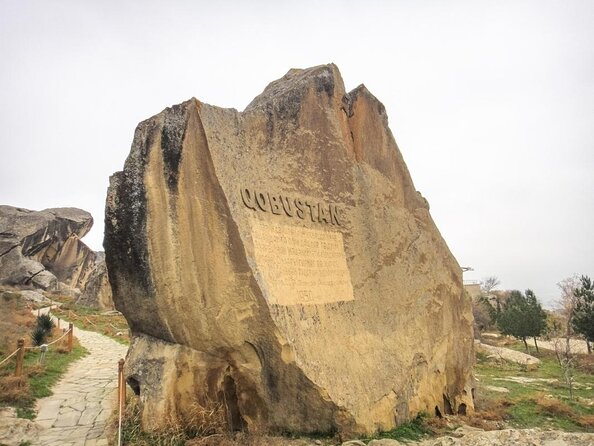
- Gobustan petroglyphs by age, with scenes spanning about 20,000 years to the first century AD
- Active mud volcanoes in Dashgil, including a high concentration near the Gobustan museum
- Clear contrasts in stone art, from hunts and ritual dancing to battle, labor, harvesting, and hearth life
- Bibi-Heybat Mosque is a rebuilt 1990s structure, recreating a famous 13th-century mosque destroyed in 1936
- World’s First Oil Well story comes with dates that make Baku’s oil history easy to grasp
Gobustan petroglyph and mud volcano trips to compare:
- Baku: Gobustan, Mud Volcano, Fire Mount, Temple Lunch Entry
★ 4.9 · 3,246 reviews - BEST Gobustan, Volcanoes & Absheron Fire Tour (Group or Private)
★ 5.0 · 1,254 reviews - Gobustan and Absheron tour (All inclusive)
★ 5.0 · 1,014 reviews
Is 7 hours a half-day? Price and pacing
First, sort out the timing. The tour is sold as a half day style experience, but the listed duration is around 7 hours. Plan your day like it is a full outing, not a quick museum stop. That matters because you will spend real time moving between sites outside central Baku.
Now the price. At $33.70 per person, it is a budget-friendly way to get a guide plus hotel pickup, private transportation, and stops that normally require separate planning. The trade-off is that entrance fees and facility or landing fees are not included, and lunch is not included either. Practically, that means your real total cost will be a bit higher once you add site admissions and food.
The pacing is also part of the value. Gobustan Rock Art gets about 4 hours, which is the heart of the experience. Mud volcanoes get about 2 hours. The remaining time is split between Bibi-Heybat Mosque and the first oil well, each around 30 minutes. That structure is good if you want breadth without turning the day into a marathon.
Gobustan Rock Art: from hunters on stone to first-century scenes
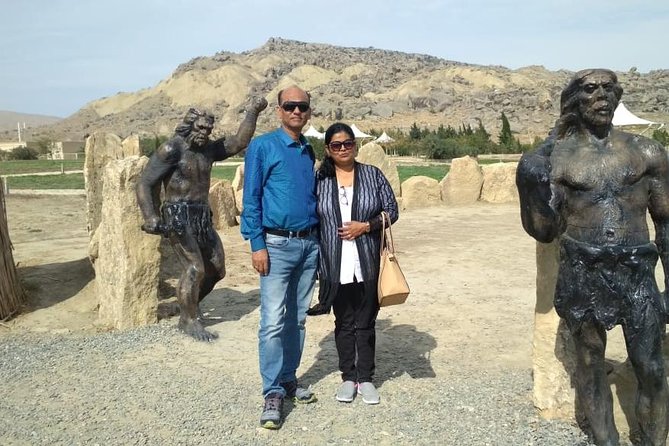
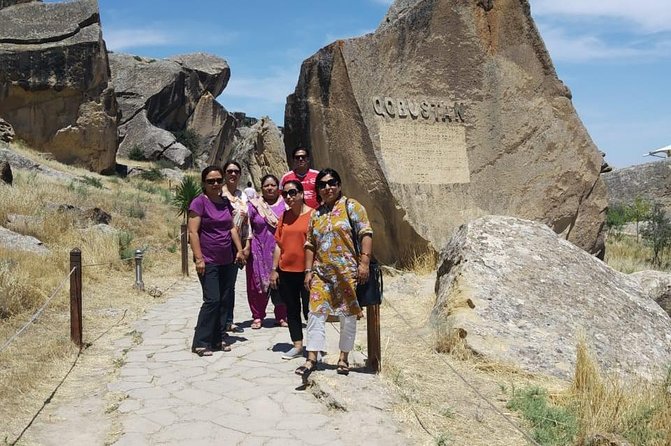
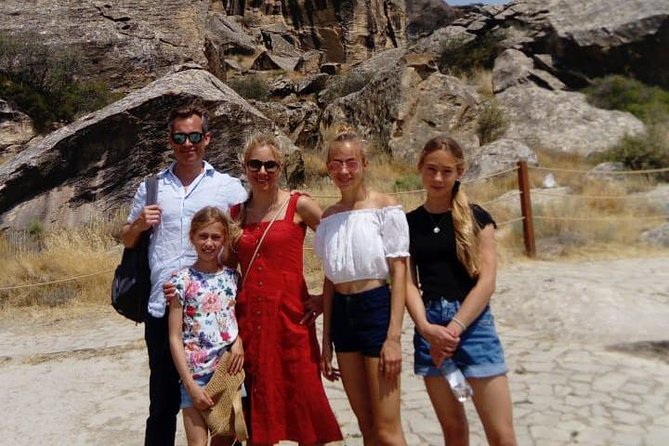
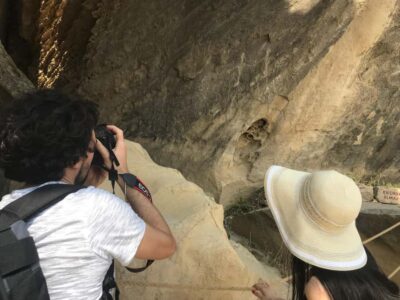
Gobustan is where this tour earns its keep. You are looking at craggy rock surfaces with carved and painted petroglyphs that stretch across a huge time span. The information you will get makes a big difference here, because it is not just seeing images, it is learning what changed over thousands of years.
The guide frames the art by period. You start with the oldest material in the sequence, dating around 20,000 years, and then move toward newer scenes from roughly the first century AD. That time jump is the key payoff. It turns the place from a static “ancient carvings” stop into a story of how people’s priorities, roles, and survival strategies shifted.
You will also learn what early images show. Some depict hunting mountain goats, plus ritual dancing with spears. Later imagery is different in theme: battle scenes, collective labor, harvesting, and women by the hearth. Even if you do not read every label, those category changes help you see why archaeologists care about Gobustan so much.
There is also practical context you will hear: Gobustan is described as having a prehistoric human civilization that left behind thousands of rock paintings, ancient dwellings, and more than 100,000 artifacts. That scale can be hard to picture. The guide helps you understand why the area is treated like an archive, with stone acting like a long-term record.
One small drawback to keep in mind: the rock art area takes real attention. It is fascinating, but you should expect walking and standing while you look at surfaces with weathered detail. Since the tour calls for moderate physical fitness, wear shoes you trust on uneven ground and bring sun protection if you are going in warmer months.
Mud volcanoes at Dashgil: watching geology work
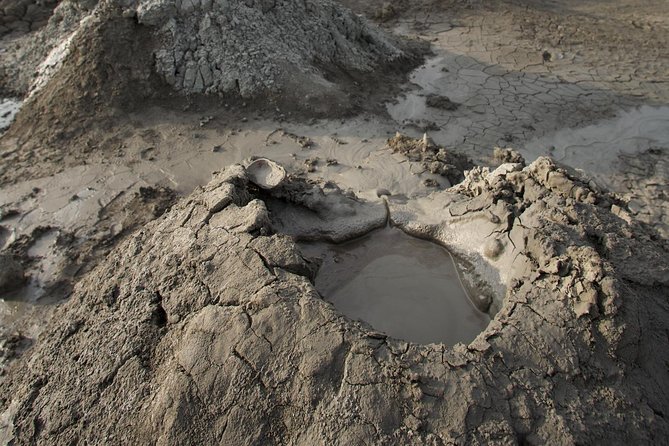
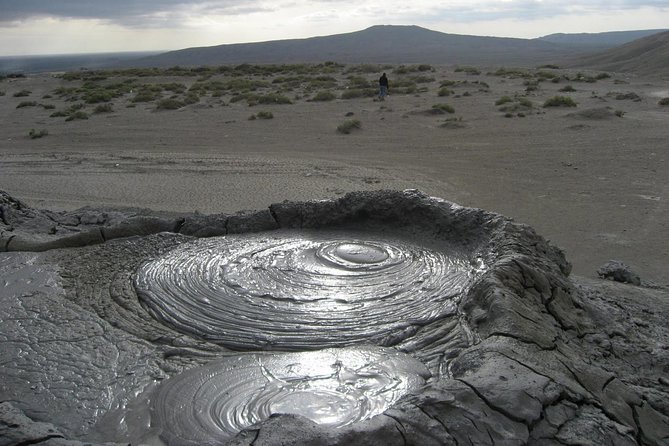
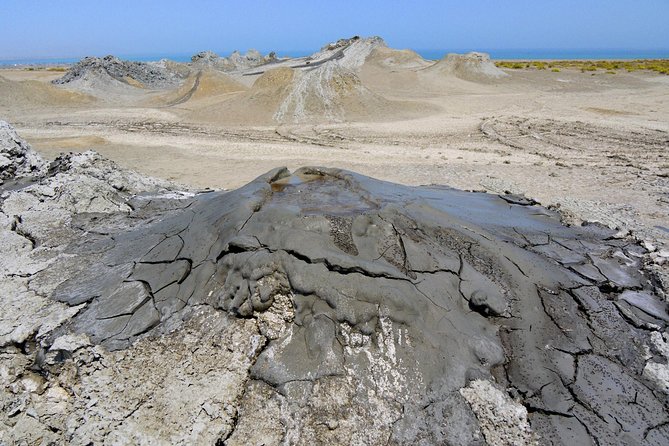
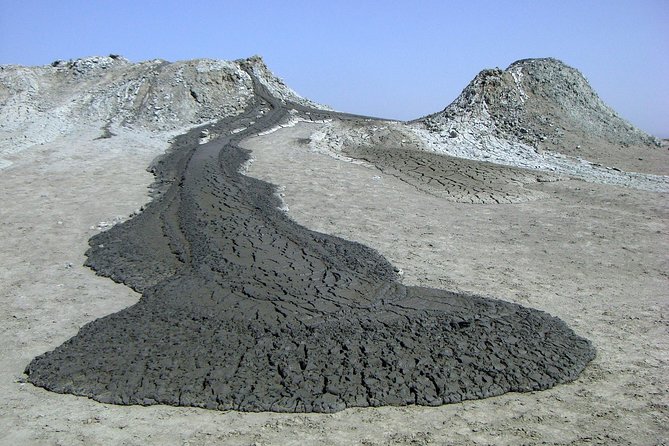
After Gobustan’s human timeline, you get a totally different kind of spectacle: active mud volcanoes. Azerbaijan is presented as having the highest concentration in the world, with around 350 of the 800 existing mud volcanoes. That is a staggering number, and it is exactly the kind of statistic that makes the visit feel grounded in real scale.
The focus area for this stop is the Dashgil Group, located to the east of the Gobustan museum. So you are not just driving out to a random spot. You are seeing a specific cluster known for a high concentration of active vents.
Two hours is a fair amount of time here. You can take photos, pause to understand what you are looking at, and give your eyes a chance to pick up changes in color and surface texture. Mud volcanoes behave differently than classic volcanoes, so your guide’s explanation helps you interpret what looks like a slow mess at first glance, but is actually an active process.
Because this stop is “admission ticket not included,” double check what you need on the day. Sometimes the museum area has one set of fees and the geological area has another. If you do not want surprises, ask in advance what is required for the mud volcano viewpoint.
Baku tours and day trips to compare:
- Baku: Guba, Shahdag, Laza & Lunch w/ Free City & Night Tour★ 4.8 · 1,455 reviews
- Shamakhi And Gabala Tour (All inclusive)★ 5.0 · 815 reviews
- From Baku: Gabala and Shamakhi Tour (Free Baku City Tour)★ 4.8 · 695 reviews
- Baku: Candy Cane, Guba, Khinaliq village with Homemade Lunch★ 4.9 · 519 reviews
Bibi-Heybat Mosque: a 1990s recreation with a 13th-century identity
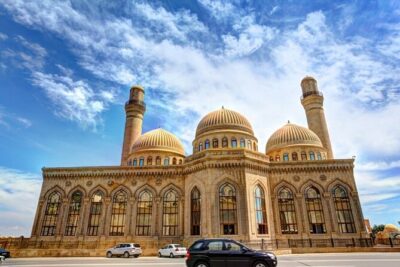
Bibi-Heybat Mosque is a short stop, but it is a meaningful one because it explains how history survives even after destruction. You will be told that the existing structure was built in the 1990s as a recreation of the original Bibi-Heybat mosque, which dates to the 13th century.
The story includes names that make the timeline feel specific: the original was built by Shirvanshah Farrukhzad II Ibn Ahsitan II. Then, the key turning point comes in 1936, when the mosque was completely destroyed by the Bolsheviks. The recreated version was built to restore that identity in a modern form.
That mix of continuity and loss is why I like this stop. It is not just a photo moment. It connects architecture to political history and shows why cultural sites can reappear in new forms.
Expect about 30 minutes here. That is enough time to see the building and absorb the basics from your guide, but not enough for long wandering or deep exploration. If you prefer slow mosque visits, you might want to come back later independently.
Also, since this is a place of worship, dress modestly and plan for respectful behavior even if you are short on time. The tour does not spell out dress rules, but the setting is straightforward.
Baku’s first oil well: why 1846 is still a big deal
One of the most practical ways to understand Baku is to tie it to oil. This stop does that with a clear anchor: the world’s first-ever mechanically drilled oil well.
The World’s First Oil Well is located in the Bibi-Heybat settlement, about 10 kilometers west of Baku. The dates matter. The well produced the first gush of oil in 1847, just one year after the drilling in 1846. It was reportedly only 21 meters deep at the time, which gives you perspective on how early industrial methods were.
There is also a modern update you will hear. On 26 April 2017, SOCAR completed reconstruction of the first oil well. That is helpful because it keeps the story from feeling like a distant legend. It becomes something that was maintained and restored in recent years.
This stop is only about 30 minutes and is marked as free for admission. That means it works well as a breather after Gobustan and mud volcanoes. You will likely leave with at least three dates in your head, which is the best kind of museum souvenir, dates you can repeat later.
What you should bring (and what can slow you down)
This tour is not described as extreme, but it does require moderate physical fitness. You should assume some walking and standing, especially around rock formations at Gobustan.
Here is what you should plan for:
- Comfortable, grippy shoes for rocky or uneven ground at Gobustan
- Sun protection if you are visiting during brighter hours
- Water, since lunch is not included
- A light layer, because conditions can shift between outdoor sites
Time can also feel compressed. Gobustan takes about 4 hours, mud volcanoes about 2, then you get two quick 30-minute culture stops. If you get tired halfway through Gobustan, you might feel rushed at the end. My advice is to treat the first stop like the main event. If you give it your best attention, the rest lands more smoothly.
Also, keep your expectations realistic about the vehicle time. One review calls out the experience feeling like a lot of time sitting in the car, with limited room. Even if your day goes well, car time is part of the deal on this route. If you are sensitive to cramped seating, ask the operator ahead of time about vehicle type and comfort.
Value check: where $33.70 makes sense, and where it might not
For the price, the big win is bundled guidance and transport. You are not just buying entry to one site. You are getting a guided route that covers prehistory, geology, and two historic Bibi-Heybat related stops.
The catch is the extras. Entrance and facility or landing fees are not included, and lunch is not included. So do not judge value only by the $33.70 line item. Judge it by the total you will actually pay at the end, plus whether the guide saves you time you would otherwise spend on planning and tickets.
Also, the tour includes pickup drop-off and private transportation. That can be a major value-add if you are staying in Baku hotels that make leaving and returning easy. If you are staying outside the central areas, pickup can save a lot of hassle, and hassle is time, and time is money.
In short: this is good value if you want a structured introduction to Gobustan and you appreciate the context a guide provides. It is less ideal if you dislike car time, hate short culture stops, or expect a slower, deeper exploration with extra time at each location.
Who should book this Gobustan tour, and who should skip it
This tour fits best if you like variety and you want a guided arc. Gobustan Rock Art appeals to people who enjoy archaeology and symbolism. The mud volcanoes appeal to people who like nature that feels a little strange and very real. Bibi-Heybat Mosque and the first oil well round it out, giving you Baku context without turning it into a long museum day.
It is also a good choice for visitors who do not want to stitch together multiple tickets and transportation options. With professional guiding plus hotel pickup, you can focus on seeing and learning.
I would consider skipping or switching to something else if:
- you strongly dislike vehicle time and cramped seating
- you want a long, unhurried visit at just one main site
- you are not interested in both prehistory and geology
Should you book? My honest call
If you want a guided day that connects 20,000-year rock art, active mud volcano geology, and Baku’s oil story, this tour is an efficient way to do it. The structure gives Gobustan enough time to matter, then uses shorter stops to keep variety without dragging you through hours of planning.
But be smart about expectations. Expect about 7 hours in total, and be aware that car time is part of the experience. If that is a deal breaker for you, ask about vehicle comfort before you commit.
FAQ
How long is the Gobustan guided tour from Baku?
The tour duration is listed as approximately 7 hours.
Does the tour include hotel pickup and drop-off?
Yes. Pickup and drop-off are included, along with private transportation.
Are entrance fees included for Gobustan Rock Art and the mud volcanoes?
No. Entrance fees are not included, and the rock art and mud volcano stops are listed as admission ticket not included.
Is lunch included in the price?
No. Lunch is not included.
How many people are in the group?
The tour/activity has a maximum of 100 travelers.
Is free cancellation available?
Yes. You can cancel for a full refund up to 24 hours in advance of the experience start time.
More Half-Day in Baku
- Baku: Half-Day Gobustan and Mud Volcanoes Tour with Entry★ 4.7 · 144 reviews
- Gobustan & Mud Volcanoes Half Day Adventure★ 5.0 · 36 reviews
- Baku: Atashgah Fire Temple & Burning Mountain Half-Day Tour★ 4.0 · 35 reviews
- Half-Day Baku City Sightseeing Tour★ 5.0 · 23 reviews
Latest additions around Baku



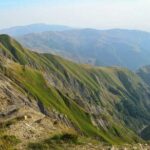

Gobustan Petroglyphs & Mud Volcano Trips, compared.
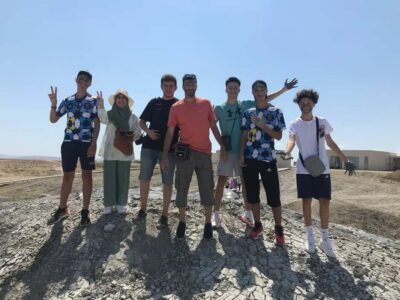
Gobustan, Mud Volcano, Fire Mount, Temple Lunch Entry
Read our review →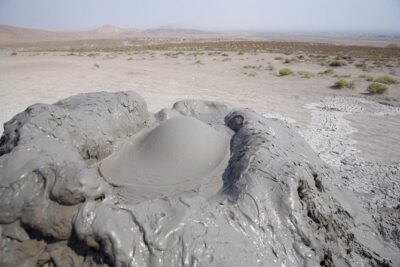
BEST Gobustan, Volcanoes & Absheron Fire Tour (Group or Private)
Read our review →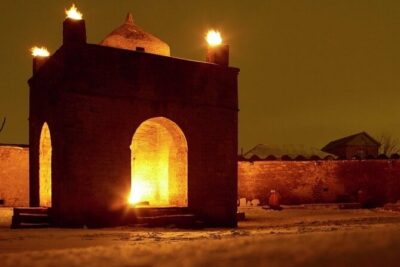
Gobustan, Volcanoes, Fire Temple and Yanardag Day Trip
Read our review →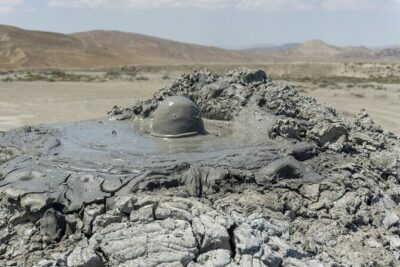
Gobustan & Mud, Fire Temple, Burning Mountain (Group & Private)
Read our review →
Gobustan-Mud Volcan-Fire Temple and Mountain Tour/Entrance inc
Read our review →
Gobustan Mud Volcanoes Temple & Entry tickets included
Read our review →Browse the lists this tour appears in