
Reviewed · GOBUSTAN PETROGLYPHS & MUD VOLCANO TRIPS
Gobustan and Absheron Tour with Guide
Mud volcanoes and ancient carvings, one day. I love the hotel pickup and the way the day pairs Gobustan rock art with Ateshgah and Yanar Dag, guided in person by a multilingual team (I even heard one guide name, Rahil). One consideration: it runs long, and parts of the day are outside, so good weather matters, and the mud volcano area can get messy fast.
This is a solid choice if you want a classic mix of natural oddities and culture without doing the planning. You get an air-conditioned vehicle, bottled water, photo shoots, and drop-off back where you started, which makes the day feel less like logistics and more like sightseeing. The price is $40 per person, booked about 15 days in advance on average, and it can be a decent value because entrance fees are handled for several of the key sites.
You will likely spend most of the time on the move, with transport taking about 2 to 3 hours total, plus shorter guided stops. If you like structured pacing, this works. If you hate crowds, the max group size is up to 99, though the experience is still operated as a group day with a guide.
In This Review
- Key things to know before you go
- A well-paced half-day turning into a full cultural day
- Bibi-Heybat Mosque: sea views, courtyard calm, and an easy first stop
- Mud volcanoes: why this is not just a photo stop
- Gobustan rock art: the one-hour stop that helps you read the place
- Ateshgah Fire Temple: fire vents, UNESCO status, and the religion angle
- Yanar Dag: the walking-distance reminder that gas is still doing the work
- Heydar Aliyev Cultural Center: modern design as a cool-down
- What the guide adds, and why multilingual support matters
- Price and value: what $40 gets you, and what might cost extra
- Who this tour suits best
- Quick tips so your day goes smoother
- Should you book the Gobustan and Absheron tour?
- FAQ
- How long is the Gobustan and Absheron tour?
- What time does the tour start?
- Is hotel pickup and drop-off included?
- Are entrance tickets included?
- Is lunch provided?
- What languages do the guides speak?
- Does weather affect the tour?
Key things to know before you go
- Hotel pickup and drop-off so you can start at 9:00 am without hunting for a meeting point
- Mud volcanoes plus rock art in the same day, which is a smart pairing for the Gobustan area
- Ateshgah Fire Temple and Yanar Dag focus on the same idea, fire and gas from the ground
- Photo shoots and bottled water included, small touches that add up on a long day
- Heydar Aliyev Cultural Center gives you a modern Baku design break after the outdoors
Ateshgah and Yanardag fire trips to compare:
- BEST Gobustan, Volcanoes & Absheron Fire Tour (Group or Private)
★ 5.0 · 1,254 reviews - Gobustan and Absheron tour (All inclusive)
★ 5.0 · 1,014 reviews - Baku: Gobustan, Volcanoes, Fire Temple and Yanardag Day Trip
★ 4.7 · 433 reviews
A well-paced half-day turning into a full cultural day
This tour is listed as about 7 to 8 hours, starting at 9:00 am. The rhythm is simple: a few focused stops, then a lot of ride time. That can sound tiring on paper, but it is actually one of the practical advantages of paying for a guided day trip in Baku, where distances between sights can add up.
You also get the comfort factor. The tour includes an air-conditioned vehicle, bottled water, and hotel pickup plus return drop-off. That matters when you are balancing outdoor sites, early starts, and the fact that several stops are not “quick photo and gone” moments. The guide keeps you moving, points out what to pay attention to, and handles the group logistics so you can focus on seeing.
Price-wise, $40 can feel low for a day with pickup, guide time, and multiple major stops. The value gets better if you choose the option where entrance tickets are covered for Gobustan rock art, Ateshgah, and Yanardagh. One extra cost to expect: the mud volcano entrance is not included, so you may pay that separately depending on how the day is organized.
Bibi-Heybat Mosque: sea views, courtyard calm, and an easy first stop
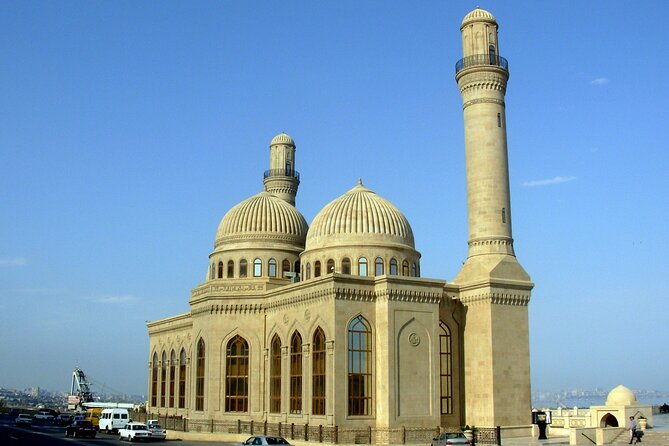
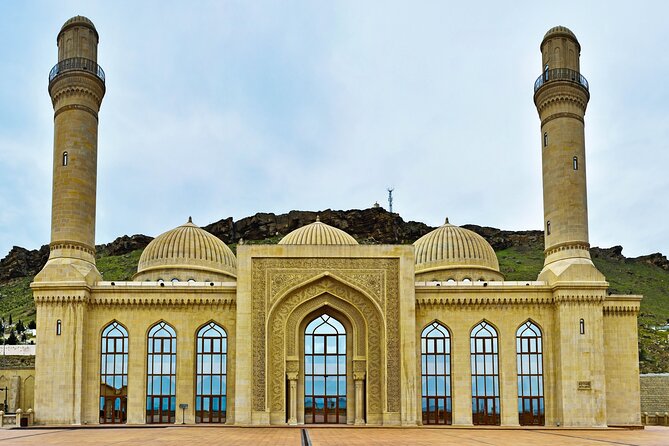
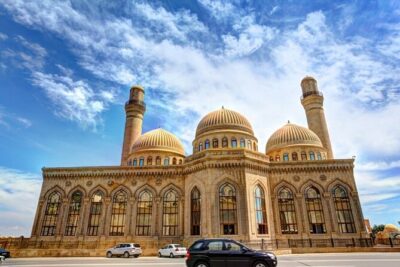
The day begins at Bibi-Heybat Mosque, about a 30-minute visit. Even in a short stop, this place earns its spot early. You do not just look from outside, you can see the layout both outside and inside, then take a leisurely walk around the nursery area. The setting is a nice contrast to the later mud-and-fire stops because you get a more peaceful, heritage-focused start.
One detail I like for first-time visitors is that the mosque connects to the geography. You can enjoy views toward the Caspian Ocean while you walk the grounds. It makes the building feel rooted in Baku’s real atmosphere, not sealed off behind a ticket counter.
Ticket note: the tour lists the admission ticket as free for this stop. That is one less thing to think about on a schedule where you already have multiple entry situations later.
Mud volcanoes: why this is not just a photo stop
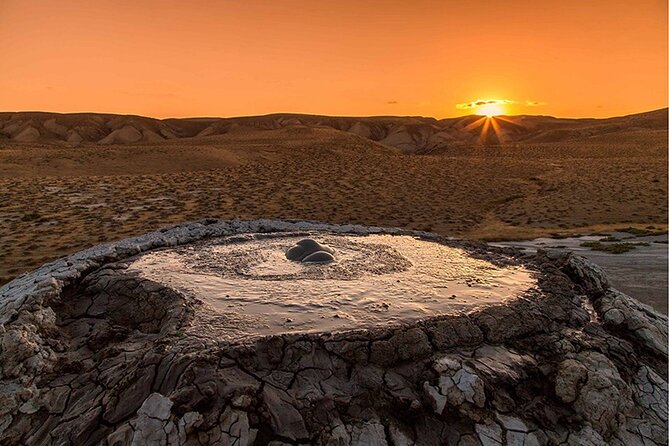
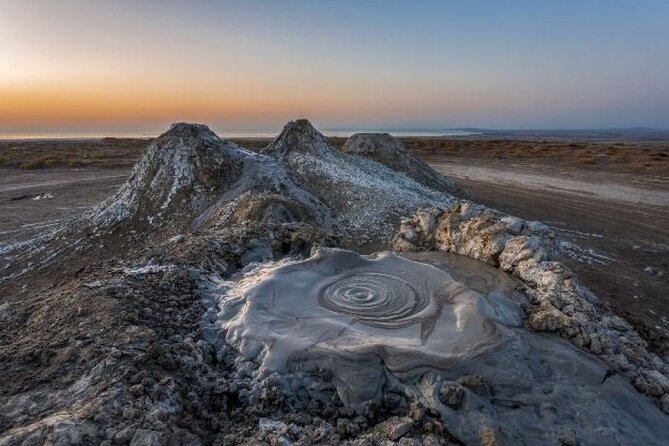
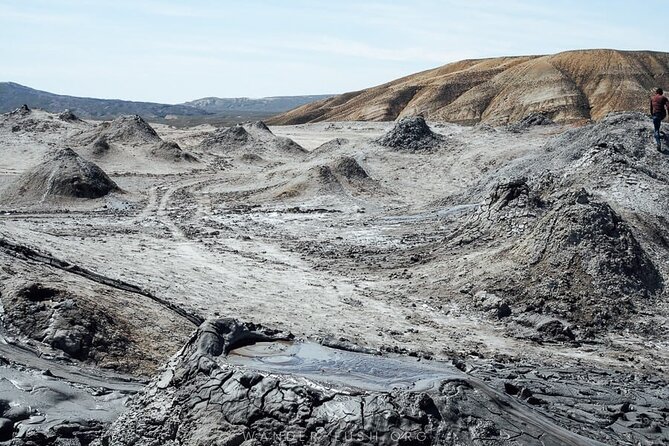
Next comes the mud volcano area, around 1 hour. Azerbaijan has an unusually high number of mud volcanoes compared with many other places, with an estimate that around 300 are in Azerbaijan. The tour also notes that Azerbaijan sits within the wider picture of roughly 700 worldwide.
Here is why it is worth your time. Mud volcanoes are one of those natural phenomena where the scenery looks like a science project made real, and you can often see how the ground behaves. The tour also points out that some people go for mud bathing, with the idea that the mud has restorative properties. I would not plan your day around the bathing, but it helps explain why people treat the area like more than a viewpoint.
Practical reality check: this is where you should expect the mess factor. One guide story I picked up from the experience described the route to the volcano as full of mud and slush, and the visit involved being taken in another car to handle the terrain. That same account praised the driver, Rahil, for expert handling on muddy ground, and even mentioned a vehicle that was older but strong enough for the conditions. So yes, you can expect uneven, wet surfaces, and you should dress accordingly.
If you do not want to think about mud at all, bring footwear you can commit to. If you do want a memorable experience, this is the stop that tends to deliver the wow factor.
Gobustan petroglyph and mud volcano trips to compare:
- Baku: Gobustan, Mud Volcano, Fire Mount, Temple Lunch Entry★ 4.9 · 3,246 reviews
- Gobustan & Mud, Fire Temple, Burning Mountain (Group & Private)★ 4.5 · 418 reviews
- Baku: Gobustan Absheron Tour Entry Tickets included★ 4.9 · 329 reviews
- Gobustan-Mud Volcan-Fire Temple and Mountain Tour/Entrance inc★ 5.0 · 267 reviews
Gobustan rock art: the one-hour stop that helps you read the place
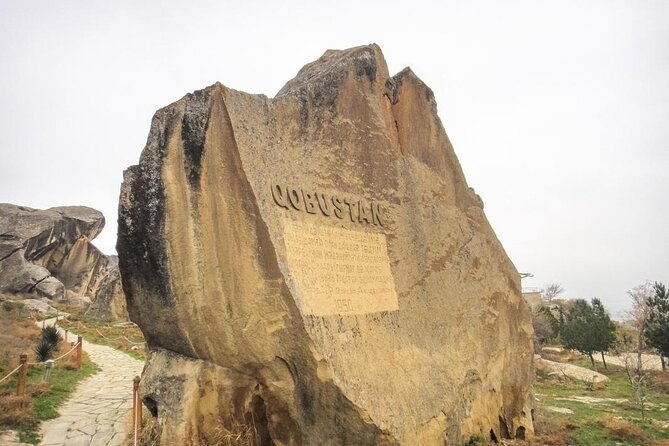
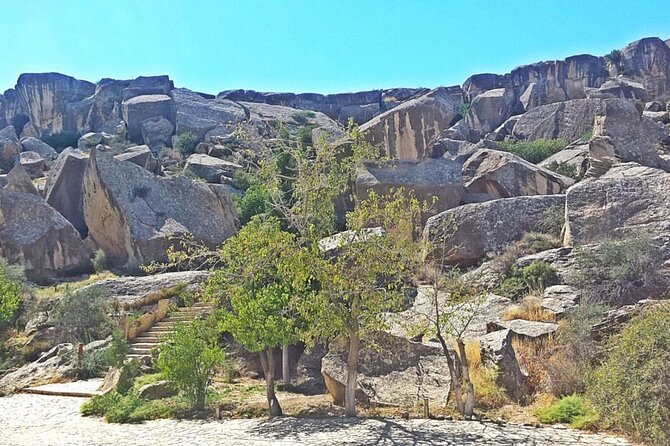
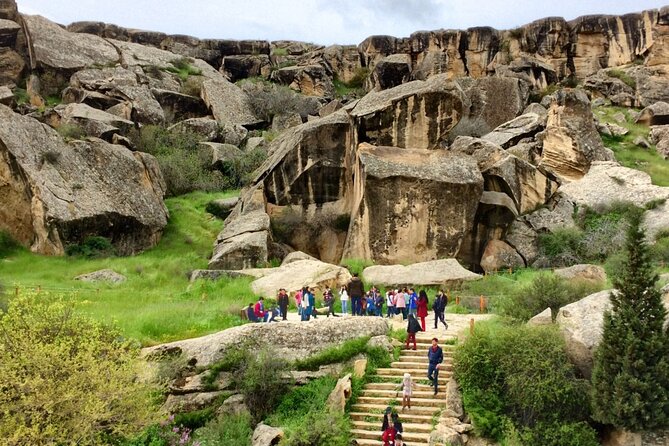
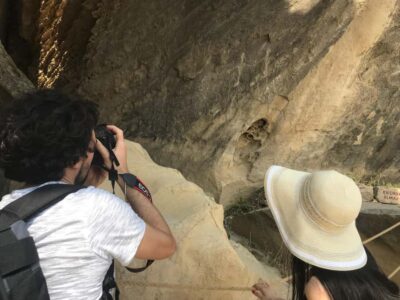
Gobustan rock art is timed at about 1 hour, and it is one of the main reasons this tour works as a day plan. The idea is straightforward: petroglyphs carved into stone show scenes from long ago, including human and creature figures, hunting scenes, and day-to-day life.
The tour’s framing is useful. You are not just looking at random carvings. You are learning how researchers connect the art to early societies and how the figures reflect everyday existence. This matters because Gobustan is easy to treat as a “cool rocks” moment unless someone gives you a lens.
Ticket note: the tour’s included items indicate entrance tickets for Gobustan rock art are covered (with the relevant option). That is great value because it prevents the day from turning into a last-minute scramble.
What you should watch for during your hour: scanning for repeating themes. Hunting scenes are often a strong anchor, and human and animal figures can help you understand how people used the site over time. The carvings are old, but the scenes feel strangely direct.
Ateshgah Fire Temple: fire vents, UNESCO status, and the religion angle
Then you head to Ateshgah, also called a Fire Temple, for about 1 hour. This is a UNESCO site, and the key idea here is simple and scientific at the same time: it is tied to gas-fueled vents that burn near torches.
What makes Ateshgah especially interesting is the cultural layering the tour highlights. The site is described as having served as a shrine for people associated with Hinduism, Sikhism, and Zoroastrianism. Even if you already know the basics of Zoroastrian fire traditions, seeing how the place functions physically, with flame tied to ground gas, gives you a more grounded connection than stories alone.
For this stop, the included section lists entrance tickets for Ateshgah, and the itinerary frames it as a priority attraction if you are curious about Azerbaijan’s cultural heritage. I like that it ties myth to place: not just “fire is sacred,” but “fire happens here for a reason.”
Yanar Dag: the walking-distance reminder that gas is still doing the work
After Ateshgah, the day continues to Yanar Dag for about 1 hour. The tour explains that this is a place where gas from the ground normally ignites. The fire is not described as constant in an enormous way, but it is still impressive. The tour also notes that the size of the fire has been reduced because of the exploration of gas reserves in the Absheron region.
This detail is a helpful reality check. It means you should not expect a Hollywood-sized blaze. You are seeing a living phenomenon shaped by human activity. And that is exactly why it feels more meaningful than a static monument.
There is also time built into the experience. The tour includes a mention of a short break at a nearby bistro where you can grab something, described as a chance for a shot. That small pause matters, especially if the earlier stops put you on your feet.
Ticket note: the included items say entrance tickets for Yanardagh are covered if you select the option. So double-check what is included when you book, and if it is not included, plan for a small add-on cost.
Heydar Aliyev Cultural Center: modern design as a cool-down
After the nature-and-fire focus, the tour shifts to Baku’s modern architecture with the Heydar Aliyev Cultural Center. It is scheduled for about 1 hour, and admission is listed as free.
This stop is a visual palate cleanser. The tour describes the building as challenging traditional engineering ideas with curved shapes and a layout that lacks straight points. It is named after Heydar Aliyev, and the design is attributed to architect Zaha Hadid. That name matters in design circles, but you do not need to be an architecture nerd to appreciate it.
My practical take: put your phone away for a few minutes and just look at the shapes as you move around. The building reads differently once you are physically near it. Also, since you have already spent time in outdoor conditions, this is the “sit down and breathe” moment of the day.
What the guide adds, and why multilingual support matters
A good guided day does two jobs: it saves time, and it helps you notice what you would otherwise miss. This tour includes an on-the-ground guide who speaks English, Arabic, Russian, Spanish, and Turkish. That is a wide range, and it matters because these sites have context you can miss if you are winging it.
The reviews reinforce the value of the human touch. One account called out the operator as the best and praised service, plus warmth toward Indian visitors. Another story highlighted a driver named Rahil who handled muddy terrain with skill on the mud volcano approach. Those details might seem small, but they change the day. When terrain gets tricky, good driving and clear guidance keep the experience smooth.
The tour also includes photo shoots. That sounds basic, but on a day with multiple landmarks, it helps you get usable photos without you trying to coordinate timing and angles alone.
Price and value: what $40 gets you, and what might cost extra
At $40 per person, this tour sits in a budget-friendly range for a full day with pickup, guide time, and multiple major stops. Here is the value breakdown in plain terms.
What is included:
- Hotel pickup and drop-off
- Air-conditioned vehicle
- Bottled water
- Photo shoots
- A guide
- Entrance tickets for Gobustan rock art and Ateshgah, plus Yanardagh if you selected the ticket option
What is not included:
- Lunch (so you should plan to eat on your own)
- Mud volcano admission (not included in the itinerary details)
So the real question becomes: is $40 worth it versus doing it independently? For most visitors, yes, because you avoid coordinating transport between separated sites, and you get a guide to interpret the carvings and the fire sites. Your biggest potential extra expense is mud volcano entry and lunch.
Who this tour suits best
This experience fits you if:
- You want one organized day covering Gobustan nature plus Baku culture
- You enjoy learning while you walk, not just taking photos
- You prefer a group day with pickup and drop-off over self-guided driving
It might be less ideal if:
- You hate long car time and would rather do fewer stops with more free time
- You are sensitive to mud and wet ground at the mud volcano area
Quick tips so your day goes smoother
- Bring clothing and shoes you do not mind getting a bit dirty at the mud volcano stop.
- If weather is questionable, take it seriously. This tour requires good weather, and it can be rescheduled or refunded if poor conditions cancel it.
- Pack for a long day even though each stop is about an hour or less. Transport adds up.
- If you care about entrance fees, confirm what is covered for Yanardagh when you book.
Should you book the Gobustan and Absheron tour?
I think this is a good booking for first-time visitors who want a structured day with variety. You get the “weird science” feeling of mud volcanoes, the human story in rock art, and the atmosphere of fire from the ground at Ateshgah and Yanar Dag, then a final design hit at the Heydar Aliyev Cultural Center.
Book it if you like guided context and you want your transport handled. Skip it or reconsider if you want a slow pace, or you are uncomfortable with muddy conditions at the volcanoes.
If you do book, I would treat it as a full-day experience, plan for lunch outside the tour, and double-check ticket inclusions so you know what to budget for.
FAQ
How long is the Gobustan and Absheron tour?
It runs about 7 to 8 hours.
What time does the tour start?
The start time is 9:00 am.
Is hotel pickup and drop-off included?
Yes. Pickup is offered from your hotel, and the tour ends back at the meeting point with drop-off.
Are entrance tickets included?
Entrance tickets are included for Gobustan rock art and Ateshgah. Yanardagh entrance tickets are included if you select that option. Mud volcano admission is listed as not included.
Is lunch provided?
No, lunch is not included.
What languages do the guides speak?
The guide can speak English, Arabic, Russian, Spanish, and Turkish.
Does weather affect the tour?
Yes. The tour requires good weather, and if it is canceled due to poor weather, you will be offered a different date or a full refund.
Latest additions around Baku




Gobustan Petroglyphs & Mud Volcano Trips, compared.
Gobustan, Mud Volcano, Fire Mount, Temple Lunch Entry
Read our review →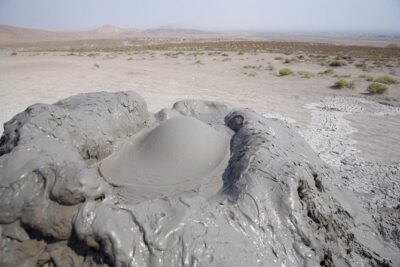
BEST Gobustan, Volcanoes & Absheron Fire Tour (Group or Private)
Read our review →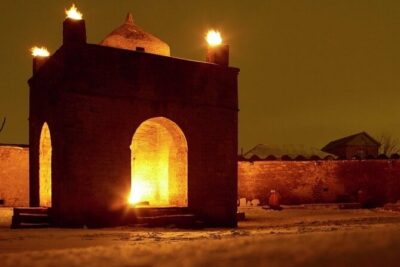
Gobustan, Volcanoes, Fire Temple and Yanardag Day Trip
Read our review →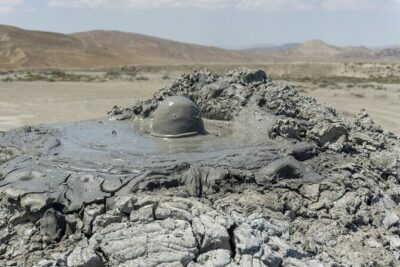
Gobustan & Mud, Fire Temple, Burning Mountain (Group & Private)
Read our review →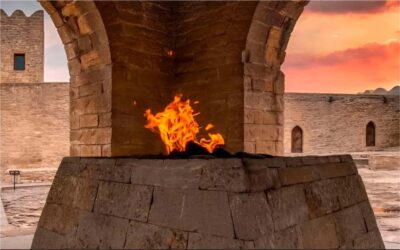
Gobustan-Mud Volcan-Fire Temple and Mountain Tour/Entrance inc
Read our review →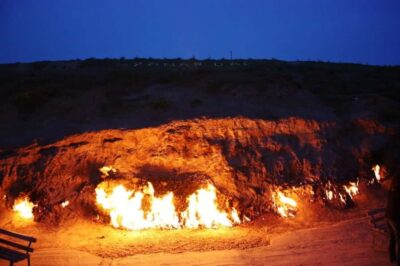
Gobustan Mud Volcanoes Temple & Entry tickets included
Read our review →Browse the lists this tour appears in