
Reviewed · GOBUSTAN PETROGLYPHS & MUD VOLCANO TRIPS
Gobustan, Mud Volcanoes, Fire Temple and Fire Mountain Tour
Four sites, one unforgettable physics lesson. This day ties together Gobustan rock art and erupting mud volcanoes, then ends with the steady flame of Yanardag. I like that the route is built around short, guided stops that actually explain what you are seeing. The only real drawback is the entrance fees are extra, and the day can stretch to 9 hours if you hit slow traffic.
Pickup is easy in central Baku, and the group stays small, up to 15 people. When your guide is strong, the whole day clicks. In at least one experience with Cavid, the explanations covered history, culture, and even Azerbaijan politics, with answers that went beyond surface facts.
One more thing to consider: you will be outside for long stretches, and a few sites involve uneven ground and stairs. Bring comfy shoes and plan for a warm day, then you will enjoy the photos and the atmosphere more.
In This Review
- Key highlights worth planning for
- How this Gobustan and Fire Mountain day fits together
- Pickup in Baku: two meeting points, minimal hassle
- Gobustan Museum: the smart warm-up before the rock art
- Gobustan Rock Shelters and Caves: thousands of petroglyphs
- Mud Volcanoes: watch Earth bubble like a science demo
- Bibi Heybat Mosque: a quick Caspian-side culture break
- Ateshgah Fire Temple: the Zoroastrian flames behind the vents
- Yanardag Burning Mountain: flames up to 3 meters high
- Timing and what the day feels like, 7 to 9 hours
- Price, value, and the extra entrance fees you should plan for
- The guide matters: what Cavid’s style tells you about the tour
- What to pack and how to make the most of each stop
- Who should book this Baku day tour
- Should you book this tour?
- FAQ
- How long is the Gobustan, Mud Volcanoes, Fire Temple and Fire Mountain tour?
- Where do you get picked up in Baku?
- What is included in the price?
- Are entrance fees included?
- How big is the group and what languages are offered?
- Is there free cancellation?
Key highlights worth planning for
- Gobustan Museum first: over 6,000 Stone Age engravings, with scientific context before you hit the rock shelters
- UNESCO petroglyphs at Gobustan: shelters and caves with thousands of 40,000-year carvings
- Mud volcanoes as geology in motion: more than 50 formations where methane and mud rise to the surface
- Ateshgah Fire Temple, tied to natural gas vents: flames linked to a 17th- and 18th-century sacred layout
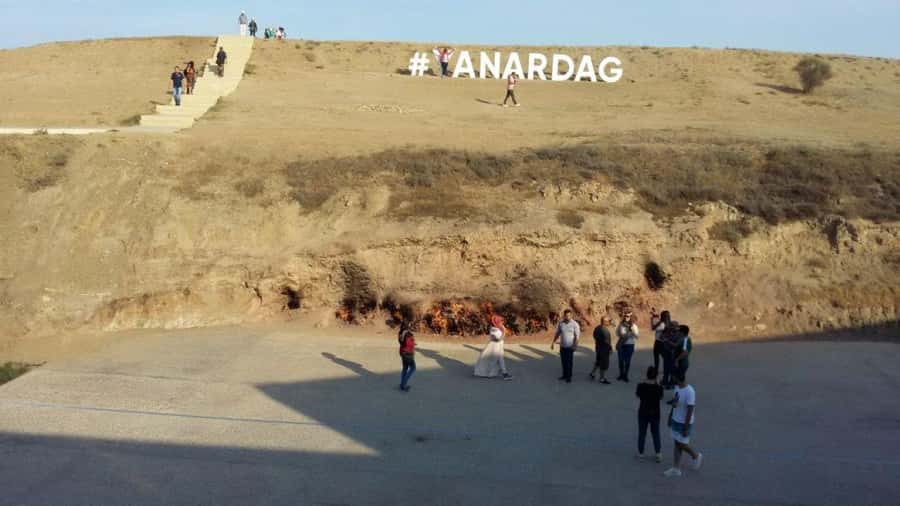
- Yanardag Burning Mountain at dusk: a steady flame up to 3 meters high from porous sandstone vents
- A short cultural stop that breaks up the day: Bibi Heybat Mosque near the Caspian gives you a breather
Ateshgah and Yanardag fire trips to compare:
- BEST Gobustan, Volcanoes & Absheron Fire Tour (Group or Private)
★ 5.0 · 1,254 reviews - Gobustan and Absheron tour (All inclusive)
★ 5.0 · 1,014 reviews - Baku: Gobustan, Volcanoes, Fire Temple and Yanardag Day Trip
★ 4.7 · 433 reviews
How this Gobustan and Fire Mountain day fits together
This tour works because it is not just a list of famous spots. It is a cause-and-effect day in Azerbaijan. You start with human marks on stone at Gobustan, then you move to the Earth itself doing its thing at the mud volcanoes. After that, you see how people turned a natural phenomenon into a place of worship at Ateshgah. The final payoff is Yanardag, where the same idea feels literal.
I also like that the day is paced for real understanding. The stops are timed to keep momentum, while still giving you enough time to read signs, look closely, and ask questions. That balance is what makes the day feel worth the effort, especially when you are only in Baku for a short stay.
Pickup in Baku: two meeting points, minimal hassle
The day starts with pickup from one of two central spots. You either meet at Nizami metro station area near Qosha Qala Qapisi (the Double Gate of the Old City), or at Gosha Gala Gapisi.
If you are staying near those central areas, you will find it easy to reach the meeting spot using metro or a taxi. The operator also keeps in touch the day before to confirm where to meet, which helps if you are arriving in Baku and want less stress on the morning. Just be ready in the lobby or at the meeting point 15 minutes early.
A small group setup matters here. With up to 15 people, you are more likely to get clearer answers from the guide and avoid that constant bottleneck feeling at viewpoints.
Gobustan Museum: the smart warm-up before the rock art
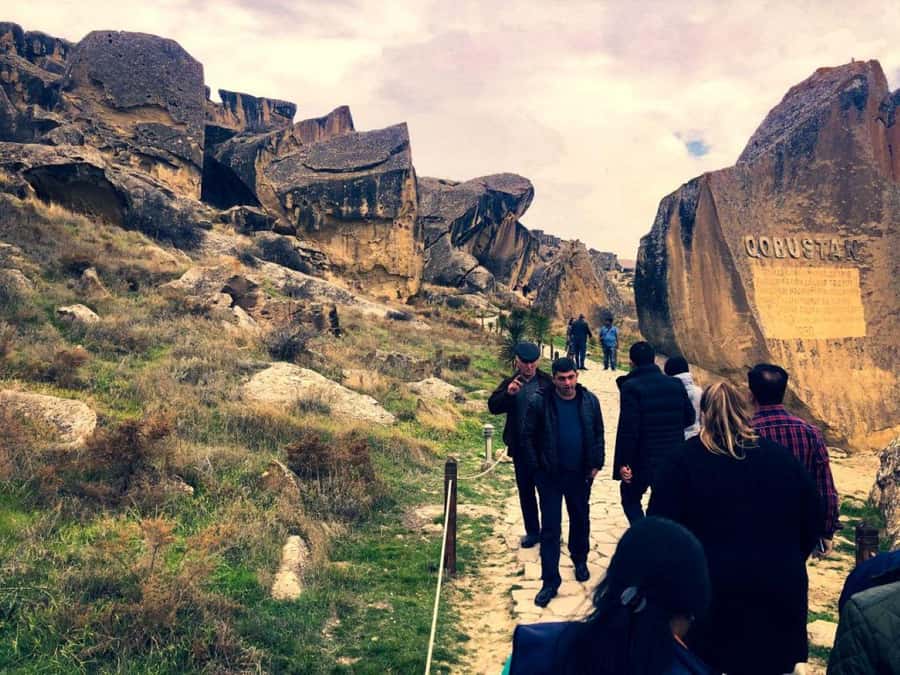
The first major stop is the Gobustan State Historical and Cultural Reserve, with a visit to the Gobustan Museum. Plan about 40 minutes inside.
This museum is where you get your bearings fast. It is designed around over 6,000 Stone Age rock engravings, and it gives the archaeological context so the petroglyphs outside make more sense. Instead of just looking at carvings as decoration, you start noticing themes like hunting, rituals, and daily life.
What I like most is the order: museum first, rock shelters next. If you jump straight outside, it is easy to miss what makes Gobustan special. With the museum background, you can look at the thousands of marks and feel like you understand the story behind them.
Gobustan petroglyph and mud volcano trips to compare:
- Baku: Gobustan, Mud Volcano, Fire Mount, Temple Lunch Entry★ 4.9 · 3,246 reviews
- Gobustan & Mud, Fire Temple, Burning Mountain (Group & Private)★ 4.5 · 418 reviews
- Baku: Gobustan Absheron Tour Entry Tickets included★ 4.9 · 329 reviews
- Gobustan-Mud Volcan-Fire Temple and Mountain Tour/Entrance inc★ 5.0 · 267 reviews
Gobustan Rock Shelters and Caves: thousands of petroglyphs
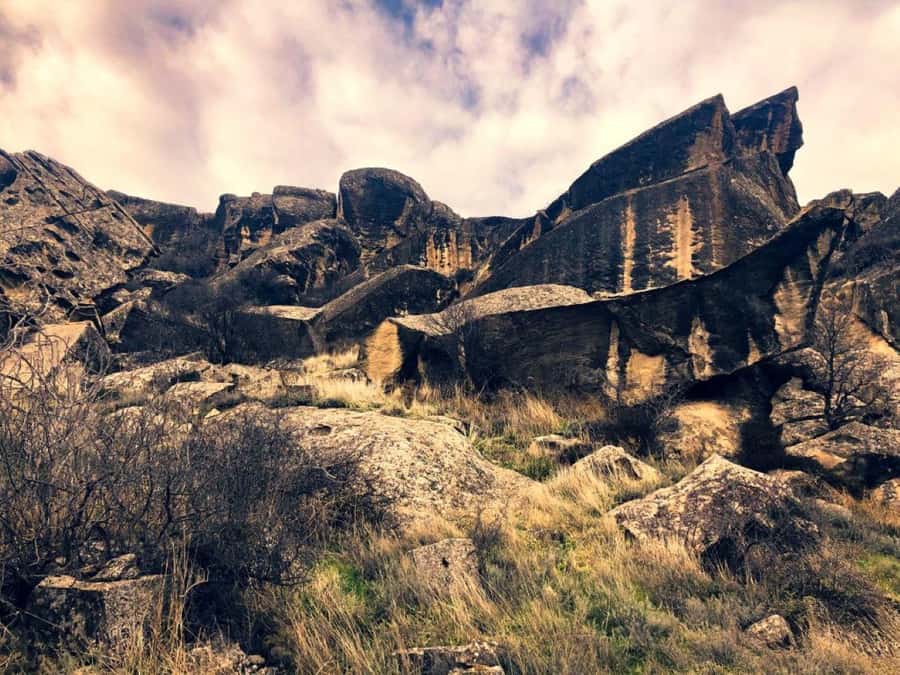
After the museum, it is a short drive to the Gobustan Rock Shelters and Caves, part of a UNESCO World Heritage site. You will spend around 40 minutes exploring this area.
Here is what makes it matter: the shelters contain thousands of petroglyphs dating back roughly 40,000 years. These carvings can reflect how early humans behaved, how they organized socially, and what they may have believed or practiced. The natural rock formations also offered protection, which is useful context when you are standing where people once lived or gathered.
You also get a fuller picture from the archaeological finds connected to the site, including tools, pottery, and dwelling remnants. The result is that Gobustan feels like an actual living place across time, not just a static monument.
Practical note: you will want to take your time reading where you can and looking for variations in carving styles. If you rush, you will lose the small clues that make rock art interesting.
Mud Volcanoes: watch Earth bubble like a science demo
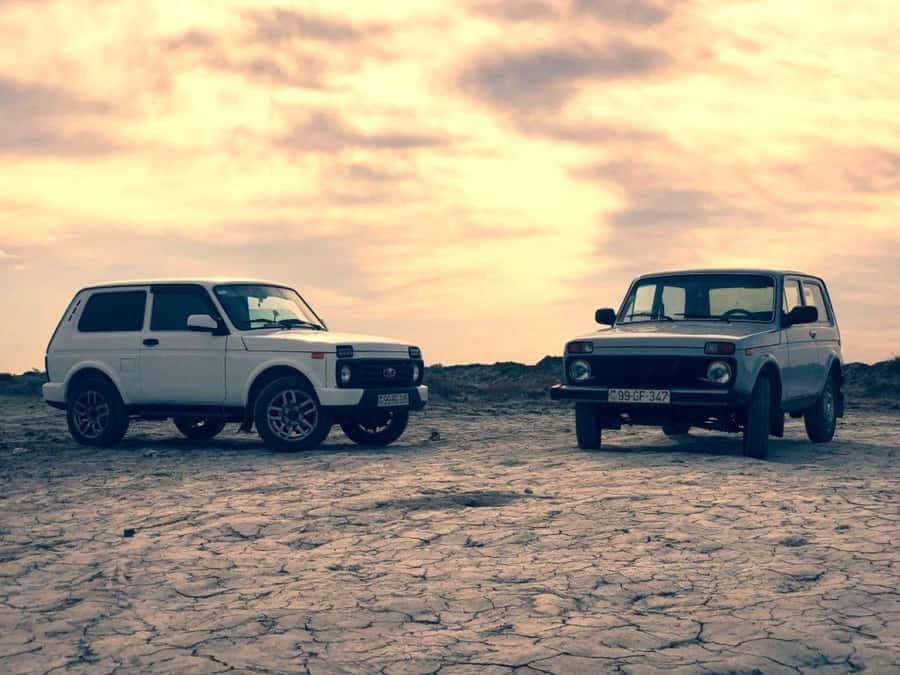
Next comes one of the most unusual stops on the entire route, the Gobustan mud volcanoes. You drive about 20 minutes from the rock art area, then spend around 30 minutes at the volcano site.
This is not a typical “sit and stare” attraction. The experience is visual and scientific at the same time. Over 50 geological formations create a surreal field of conical mounds and bubbling features. The process goes like this: natural gas, mainly methane, rises from underground and mixes with water and sediments. The eruption is mud, not lava, which is why the ground looks both dramatic and oddly earthy.
For photography, this stop is gold. You get strong textures, weird shapes, and motion that looks different from angle to angle. For curiosity, it is a rare chance to see a geologic process you usually only read about.
One consideration: the site is outdoors and can be dusty. If you have sensitive eyes, bring sunglasses.
Bibi Heybat Mosque: a quick Caspian-side culture break
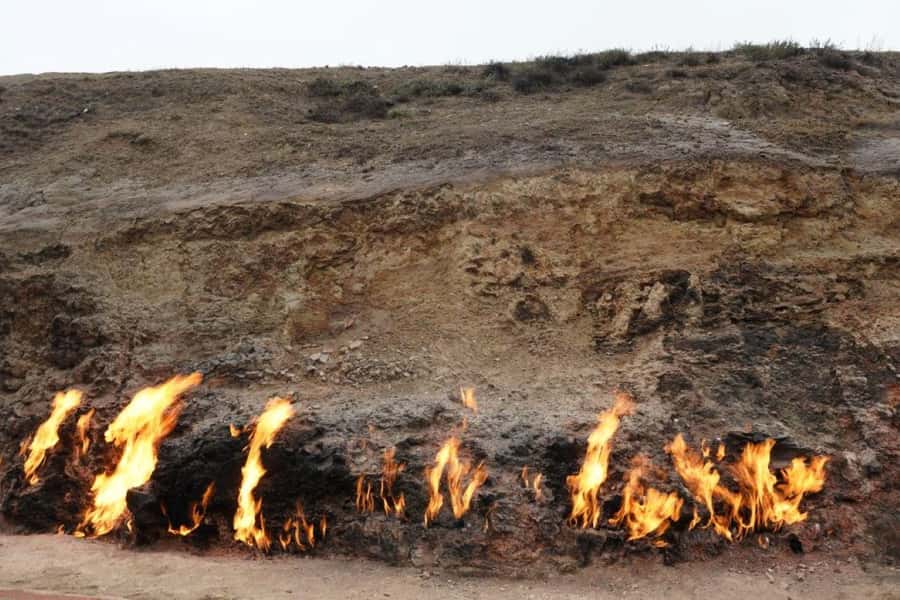
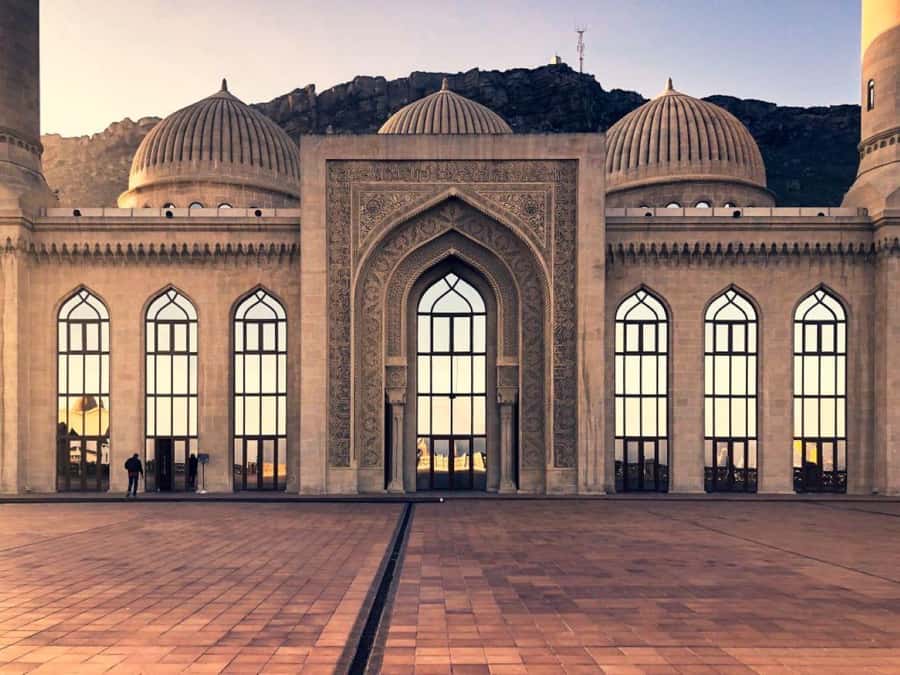
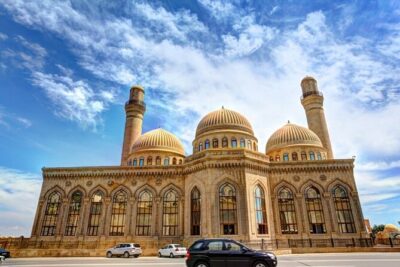
On the return route to Baku, there is a stop at Bibi Heybat Mosque, about 50 minutes into the drive back. The visit is shorter, around 15 minutes, but it helps break up the day.
The mosque is historically significant and architecturally recognizable. It was originally built in the 13th century and later reconstructed in the 1990s. Even in a brief stop, you will get a guided explanation of what you are seeing and why it is important as a spiritual landmark.
It is also a nice contrast to the earlier sites. Gobustan and the mud volcanoes are about deep time and natural action. Bibi Heybat brings you back to a living tradition tied to Baku and the Caspian.
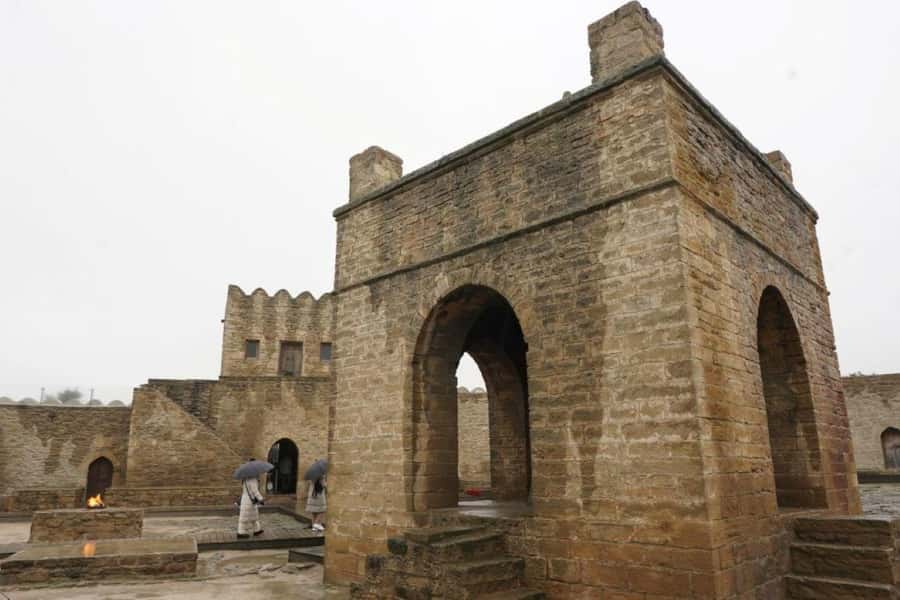
Ateshgah Fire Temple: the Zoroastrian flames behind the vents
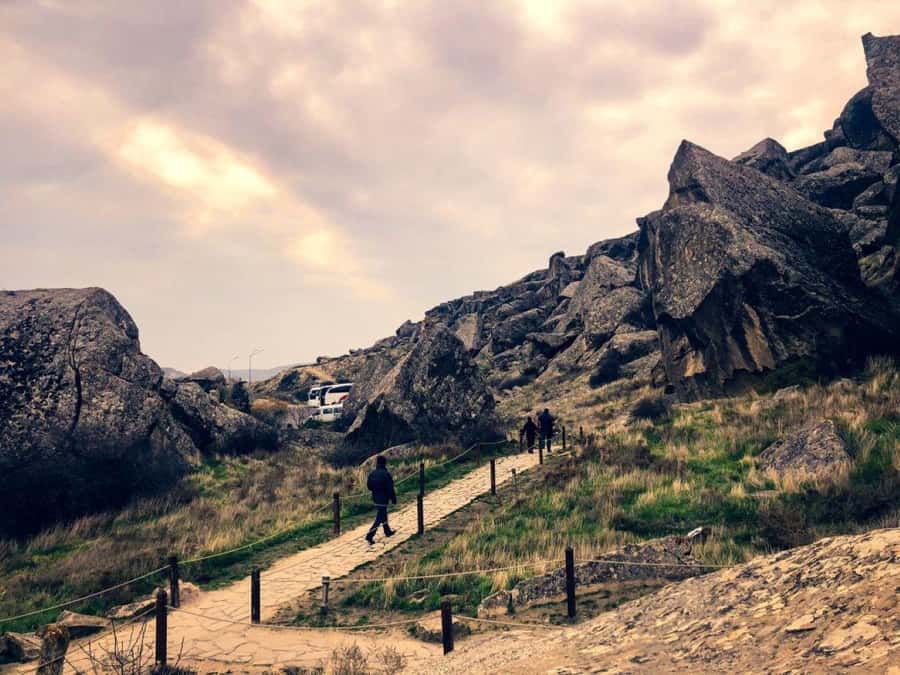
From Bibi Heybat, you drive about 40 minutes to Ateshgah of Baku in Surakhani. Expect around 40 minutes here.
Ateshgah is often described as a Fire Temple, and that is exactly what it looks like in function, not just in name. The key detail is that the temple was built on natural gas vents, and the central fire pit reflects a long-standing fire-worship tradition associated with Zoroastrian practice.
The temple complex you visit dates to the 17th- and 18th-century period. That time frame matters because it shows how older ideas can shape architecture even after centuries pass.
I like Ateshgah because it bridges nature and belief in a concrete way. You see how people honored something they could not control, while still shaping a sacred space around it. Your guide can help connect the dots between the vents, the fire, and the spiritual meaning.
Tip: bring patience for small photo angles. The best views are sometimes at specific spots inside the complex, and the guide’s pointers help.
Yanardag Burning Mountain: flames up to 3 meters high
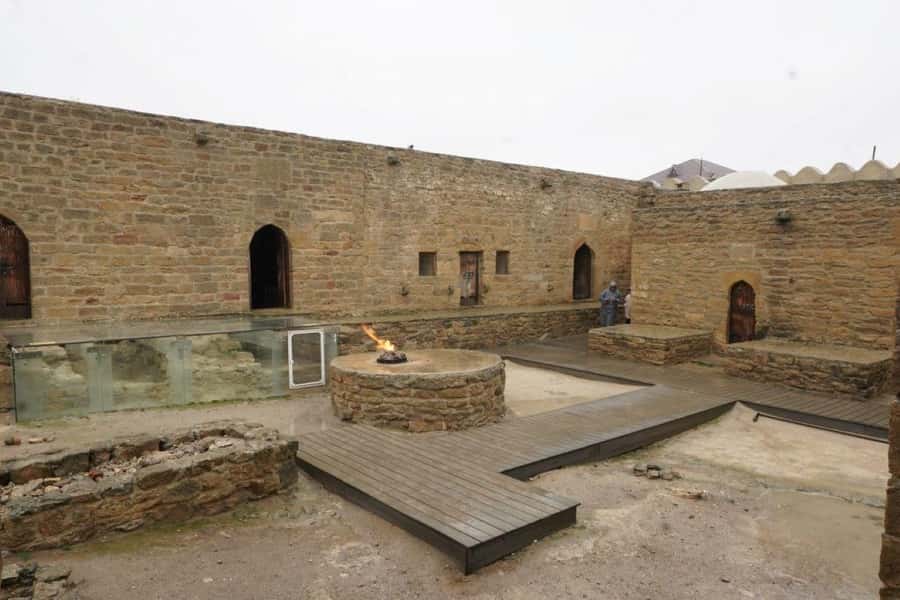
Finally, you head to Yanardag, Burning Mountain, about 30 minutes from Ateshgah. You will spend around 30 minutes observing it.
This is the final “wow” moment of the day. Yanardag has burned continuously for centuries, and the flames can reach up to 3 meters high from porous sandstone vents. The fire is steady, which makes it feel almost unreal in the best way.
If you can time it near dusk, you will likely get the most dramatic effect. Even without chasing exact sunset time, the flame against the darker sky is usually the kind of visual that makes people stop talking and just look.
Practical advice: keep your camera ready, but also take a few seconds to watch without the lens. The steady motion and the heat shimmer are part of the effect.
Timing and what the day feels like, 7 to 9 hours
The tour is listed as 8 hours, and under standard conditions you will land close to that. In some cases, it can run 9 hours to make the experience more memorable along the way.
Here is how the pacing generally adds up:
- Pickup, then drive to Gobustan area
- Museum time (about 40 minutes)
- Rock shelters and caves (about 40 minutes)
- Short drive to mud volcanoes, then about 30 minutes there
- Return drive with Bibi Heybat (about 15 minutes)
- Drive to Ateshgah, then about 40 minutes
- Drive to Yanardag, then about 30 minutes
- Final drive back to your hotel area (about 40 minutes)
That is a lot packed into one day, but it does not feel like an all-day sprint because each site has a built-in time window and guided context.
What to watch for is travel friction. Baku roads can be slow at times, and the schedule is designed to still wrap within the stated time range. Still, keep a flexible mindset.
Price, value, and the extra entrance fees you should plan for
The tour price is $89 per person for the full-day experience, and what you get for that is more than transportation. Included is:
- Hotel pickup and drop-off
- English-speaking tour guide
- Comfortable van and professional driver
- In situ and remote assistance during the tour
- One bottle of water per person
The extra cost you should budget is entrance fees. Estimated prices are:
- Gobustan Museum and Rock Art Mountain combo: about $6 per person
- Mud Volcanoes: about $9 per person
- Ateshgah Fire Temple and Yanardag Burning Mountain combo ticket: about $9 per person
If you add those estimates, you are roughly looking at about $24 in entrance fees on top of the $89 base price, depending on what is required on the day.
Value-wise, I think this works if you care about more than seeing places from the outside. When you factor in the guided explanations, the small group format, and the fact that this route strings together four major attractions that would otherwise take more planning and driving, the price starts to look reasonable. If you are traveling independently and already know exactly how to get between sites, it might be cheaper on paper, but you would miss the “what am I looking at” help that makes Gobustan and the fire sites truly satisfying.
The guide matters: what Cavid’s style tells you about the tour
One of the most praised parts of this experience is how the guide connects the sites to Azerbaijan as a whole. In one example, Cavid was highlighted for deep knowledge in history, culture, and even Azerbaijan politics, plus answers with detail and clarity.
That matters because this is not a day trip where the sights explain themselves. Gobustan’s rock art needs context. Ateshgah needs interpretation to connect the vents and the fire to the religious tradition. Yanardag is dramatic, but you still need the background to appreciate why it has the shape and why it burns the way it does.
The tour also aims for smooth logistics. In the same example, the start was on time and the day stayed within the specified time range even with city traffic jams.
Bottom line: if you pick this, you are really buying the guided storytelling, not just the itinerary.
What to pack and how to make the most of each stop
You cannot control the weather, but you can control how comfortable you are.
I suggest:
- Comfortable shoes for outdoor walking around rock and mud areas
- A hat and sunscreen for daylight exposure
- Sunglasses if it is dusty at the mud volcanoes
- A light layer if the evening is cooler at Yanardag
- Your phone or camera charged in advance, especially for Yanardag flame shots
For photos, try to vary your angle at the mud volcano formations and focus on textures. At Yanardag, shoot both wide for the overall fire effect and close for the flame height and vent details.
Who should book this Baku day tour
This day tour is a strong fit if you want:
- Azerbaijan beyond Baku streets, without spending multiple days in transit
- A mix of archaeology, geology, and religious architecture
- A guide who helps you understand what you are looking at
- A compact, structured day with pickup and drop-off handled
It is also a good match for people who appreciate variety. You get prehistoric human expression, then active natural geology, then sacred architecture shaped by a natural fuel source, and finally the steady flame of Yanardag.
Should you book this tour?
I would book it if you only have one day and you want the most popular Azerbaijan “signature” stops outside Baku. Gobustan, mud volcanoes, Ateshgah, and Yanardag are the kind of sites that feel best with context, and this tour is built for that.
I would think twice only if you dislike long outdoor days, have a strict schedule for the evening, or do not want to pay additional entrance fees. Also, remember you must follow the rules: no pets, no bikes, and no alcohol or drugs.
If you are okay with a full day and you want a real explanation behind the sights, this is the kind of tour that leaves you with more than photos. You leave knowing why the sites matter, and how they connect.
FAQ
How long is the Gobustan, Mud Volcanoes, Fire Temple and Fire Mountain tour?
It is listed as 8 hours, with a total duration typically in the 7 to 8 hour range. It can take up to 9 hours in order to give you an unforgettable experience along the way.
Where do you get picked up in Baku?
Pickup is available from two central meeting points: Gosha Gala Gapisi and Nizami metro station near Qosha Qala Qapisi (Double Gate of the Old City). Drop-off is also at these locations.
What is included in the price?
The tour includes hotel pickup and drop-off, an English-speaking tour guide, comfortable transportation with a professional driver, in situ and remote assistance, and a bottle of water per person per day.
Are entrance fees included?
No. Entrance fees are not included in the price. The estimates are about $6 for Gobustan Museum and Rock Art Mountain, about $9 for the Mud Volcanoes, and about $9 for the Ateshgah Fire Temple and Yanardag Burning Mountain combo ticket.
How big is the group and what languages are offered?
The group is small, limited to up to 15 participants. The live tour guide speaks English and Turkish.
Is there free cancellation?
Yes. You can cancel up to 24 hours in advance for a full refund.
Latest additions around Baku


Gobustan Petroglyphs & Mud Volcano Trips, compared.
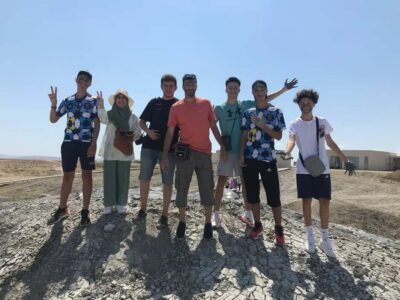
Gobustan, Mud Volcano, Fire Mount, Temple Lunch Entry
Read our review →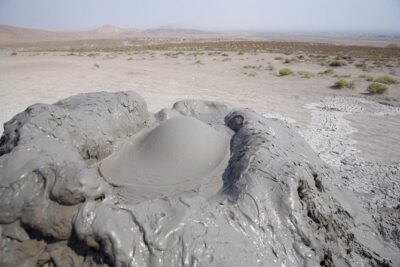
BEST Gobustan, Volcanoes & Absheron Fire Tour (Group or Private)
Read our review →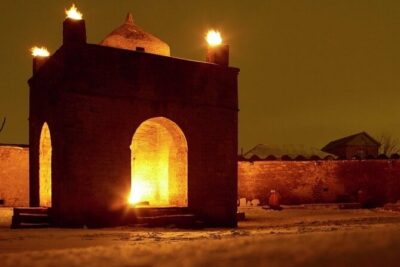
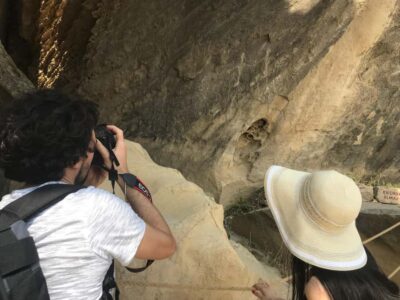
Gobustan, Volcanoes, Fire Temple and Yanardag Day Trip
Read our review →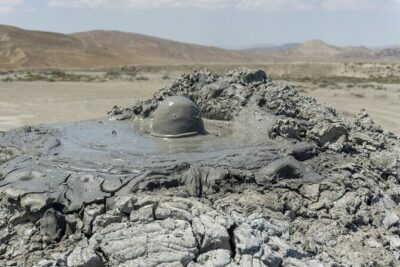
Gobustan & Mud, Fire Temple, Burning Mountain (Group & Private)
Read our review →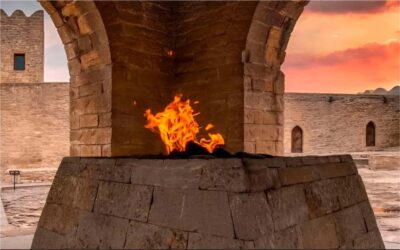
Gobustan-Mud Volcan-Fire Temple and Mountain Tour/Entrance inc
Read our review →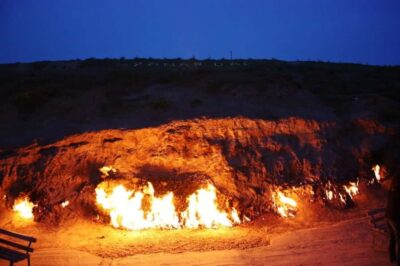
Gobustan Mud Volcanoes Temple & Entry tickets included
Read our review →Browse the lists this tour appears in