
Reviewed · GOBUSTAN PETROGLYPHS & MUD VOLCANO TRIPS
Qobustan rock arts, Mud Volcanoes, Fire temple Ateshgah, Yanardag
Fire, stone, and mud, in one Baku day. What makes this outing work so well is the mix of living fire sights and ancient rock art, with a local guide who ties it all together. I love how Zoroastrian fire worship connects to the burning gas vents you can see today, and I also like getting straight to UNESCO rock art at Qobustan. The one possible drawback is that it is a long, mostly outdoors day, so plan for sun and weather.
You get a private group experience, up to 7 people, with pickup, an air-conditioned vehicle, and WiFi on board. Stops are timed for momentum, so you spend more time looking and less time figuring out what to do next.
In This Review
- Key highlights
- Fire sights plus UNESCO rock art, why this combo makes sense
- Ateshgah Fire Temple: burning gas vents and the Zoroastrian thread
- Yanardag: the eternal flame mountain, fast but meaningful
- Mud volcanoes near Baku: geology you can look at, plus real-world uses
- Qobustan rock art and museum: UNESCO engravings in the open air
- Price and logistics: does $250 per group feel worth it?
- What the day feels like on the ground
- Who should book this tour, and who might skip it
- Should you book Panorama Travel’s Qobustan and Fire Temple tour?
- FAQ
- What is the duration of the tour?
- How much does the tour cost?
- Is pickup included?
- Is this a private tour?
- What sites are included?
- Are tickets included in the price?
- Do you get a guide and transportation?
- Is lunch included?
- Does the tour depend on weather?
- What is the cancellation policy?
Key highlights
- Ateshgah Fire Temple gas flames with a story that reaches back to Zoroastrians, long before the current 17th to 18th century structure
- Yanardag’s eternal-flame mountain in a quick stop that still gives context and practical tips
- Mud volcanoes near Baku tied to oilfields, with wild geology and real-world uses of the eruptions
- Qobustan National Historical-Artistic Preserve featuring UNESCO rock art, including more than 6,000 drawings on 1,000 rocks
- Private guide-led touring with pickup and WiFi, keeping the day smooth even when you are short on time
Ateshgah and Yanardag fire trips to compare:
- BEST Gobustan, Volcanoes & Absheron Fire Tour (Group or Private)
★ 5.0 · 1,254 reviews - Gobustan and Absheron tour (All inclusive)
★ 5.0 · 1,014 reviews - Baku: Gobustan, Volcanoes, Fire Temple and Yanardag Day Trip
★ 4.7 · 433 reviews
Fire sights plus UNESCO rock art, why this combo makes sense
If your time in Azerbaijan is limited, this is a smart day format. You are not just ticking off famous names. You are seeing how belief, geology, and human history overlap in one compact area around Baku.
On one side you have fire themes, which start as “holy” stories and end as physical reality, natural gas burning as it meets oxygen. On the other side you have Qobustan, where ancient people left thousands of rock engravings that help explain what this region looked like when humans first started marking it. Add mud volcanoes, and you get a rare mix of science and culture in one run.
I also appreciate that the pacing is realistic. You do not spend hours in one place with no guidance. Instead you get shorter, focused segments at each stop, plus a guide who gives you the meaning behind what you are seeing.
Ateshgah Fire Temple: burning gas vents and the Zoroastrian thread
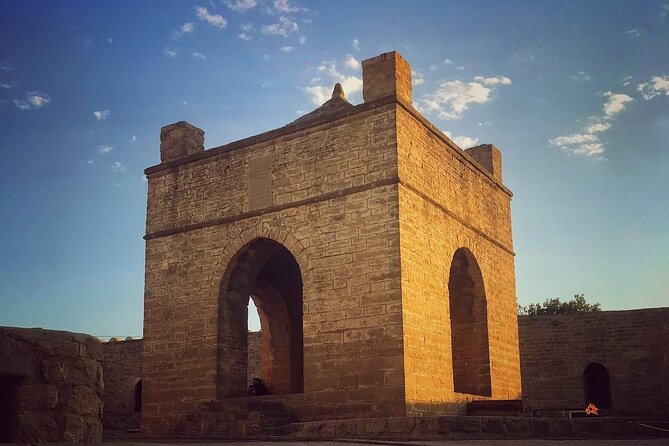
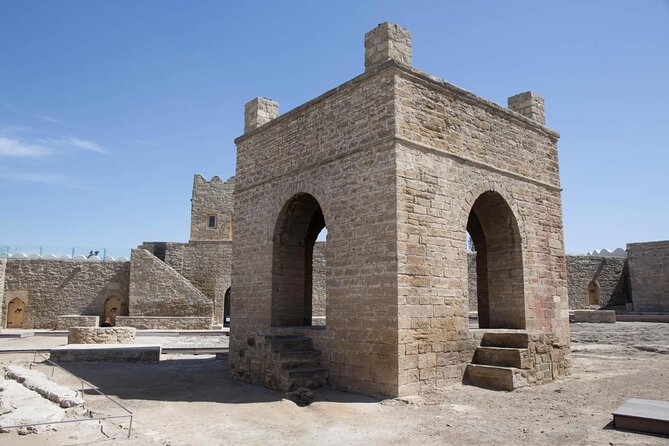
At Ateshgah, the experience starts with a simple, unforgettable sight: fire where you expect earth. The Temple of Eternal Fire is tied to natural gas outlets underground. When that gas reaches the surface, it contacts oxygen and ignites, creating the “eternal” feeling that drew worshippers for centuries.
What I like most is the historical layering you get here. The structure in its current form dates to the 17th to 18th centuries, built by a Baku-based Hindu community related to Sikhs. But the sacred association does not start there. The area was also a holy place for Zoroastrians, fire worshippers, with significance reaching back to around the beginning of our era. That is a key takeaway for you: the present temple is not the start of the story, it is one chapter in a much longer pattern of spiritual meaning.
Practically, this is a stop where you should slow down for a few minutes. Even if your visit is about half an hour, let your eyes adjust and then listen for what your guide points out. In a place like this, small details matter, like how the fire phenomenon is explained and why the site became a destination for multiple communities over time.
One more practical note: this stop is tied to the idea of inextinguishable flame, but your comfort still matters. Wear something you can handle in sun, and plan to stay alert to weather because the day overall is sensitive to conditions.
Yanardag: the eternal flame mountain, fast but meaningful
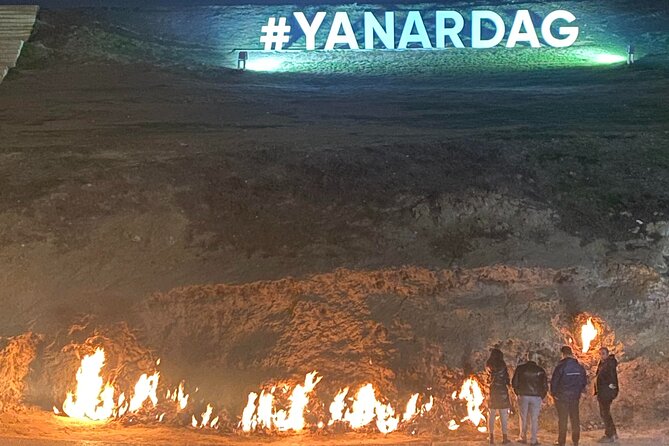
Yanardag is famous for the same “eternal flame” theme, but it feels different because it is tied to a mountain setting. It is often described as one of the best-known places to see Azerbaijan’s natural fire sources, with a backdrop that makes the phenomenon feel dramatic.
The historical context matters here too. In earlier times, Azerbaijan was associated with fire worship, especially through Zoroastrian belief. People saw fire sources as manifestations of divine power and built altars and temples around them. When you stand by Yanardag, it is easier to understand why fire was not just a symbol, it was treated like something sacred and worth traveling for.
This stop is short, about 15 minutes. That sounds quick, and it is. The value comes from using that time well. Do not rush past the first view. Get your bearings, ask your guide what they want you to notice, and then take a couple of photos that you can later match to the story you heard.
If your goal is to learn, a short stop can be perfect. You keep energy for the longer, more immersive parts later in the day, like Qobustan and mud volcanoes.
Gobustan petroglyph and mud volcano trips to compare:
- Baku: Gobustan, Mud Volcano, Fire Mount, Temple Lunch Entry★ 4.9 · 3,246 reviews
- Gobustan & Mud, Fire Temple, Burning Mountain (Group & Private)★ 4.5 · 418 reviews
- Baku: Gobustan Absheron Tour Entry Tickets included★ 4.9 · 329 reviews
- Gobustan-Mud Volcan-Fire Temple and Mountain Tour/Entrance inc★ 5.0 · 267 reviews
Mud volcanoes near Baku: geology you can look at, plus real-world uses
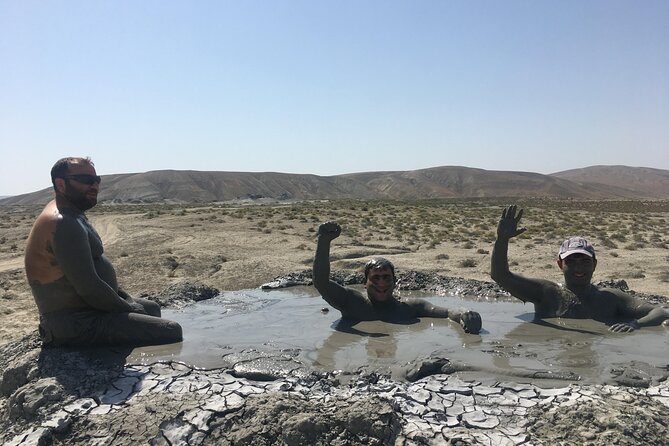
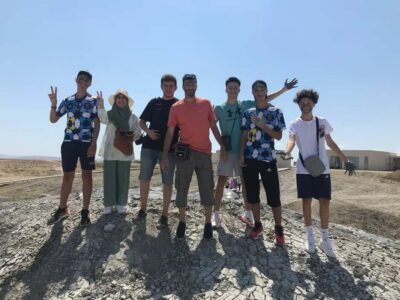
Then comes the “wait, this is real” moment. Mud volcanoes are exactly what the name suggests: openings where mud and liquid erupt. Azerbaijan has more of these features than any other country, spread across the region. You are visiting a set of mud volcanoes around Baku, and the tour frames them with a clear scientific link.
Here is the key context to remember: these mud volcanoes are associated with oilfields. Azerbaijan has rich oil and gas deposits in territories where mud volcanoes occur, including areas like Lokbatan, Garadgh, Neft Dashlari, and Mishovdagh. So you are not just seeing odd natural behavior. You are seeing a surface expression connected to the energy geology of the region.
The tour also gives you time depth. Mud volcano activity in this territory is described as beginning around 25 million years ago. That long timescale is a good mental reset after the human scale of rock art and temples.
One of the most useful, practical facts you get is about how these materials are used. The mud volcano eruptions produce mud, lava, and liquids. These are used as raw materials in chemical and construction industries and also in pharmacology. In other words, the spectacle is not only for viewing. It is part of how people interact with the geology.
This is the stop where you will probably want to bring your best “observational mindset.” Spend a few minutes looking at how the ground looks around the eruptions and how the guide explains cause and effect. Even if you only get around an hour here, it is enough time to understand what makes a mud volcano different from a normal volcanic cone.
And since it is outdoors, remember the day depends on good weather. If conditions are poor, the experience can be rescheduled.
Qobustan rock art and museum: UNESCO engravings in the open air
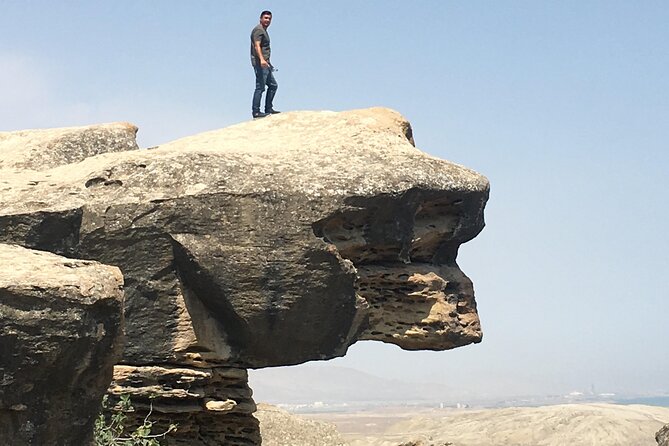
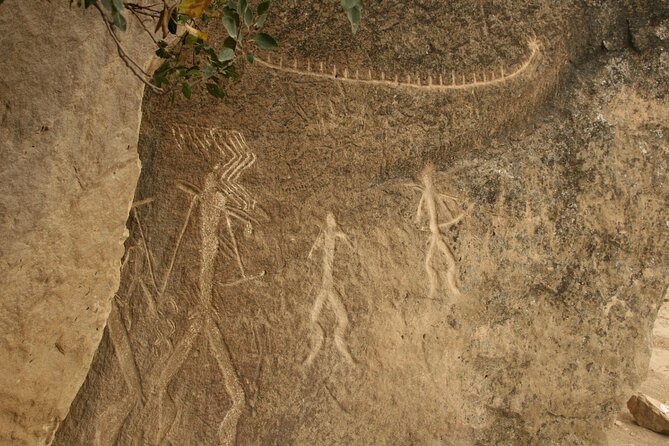
Qobustan National Historical-Artistic Preserve is where the day shifts into deep human scale. This is an open-air museum and UNESCO World Heritage Site recognized for outstanding universal value, especially because of the density of rock art engravings.
You are looking at a massive collection. The numbers are big enough to feel almost unbelievable until you see it for yourself: more than 6,000 drawings on about 1,000 rocks. The site also includes more than 100,000 artefacts. In plain terms, it is a whole library carved into stone.
The museum visit is described at around one hour. That is the right length if your guide is pointing out what to look for. When you are looking at rock art, the challenge is not just seeing it. It is learning what you are seeing. A good guide makes it easier to interpret patterns, motifs, and context instead of treating everything like random marks.
I also like that Qobustan helps you connect the dots between times. You move from spiritual fire stories at Ateshgah and Yanardag into human markings on stone at Qobustan. By the time you stand in the open-air preserve, it is easier to understand why this region mattered. The art is evidence of long-term presence and repeated meaning-making.
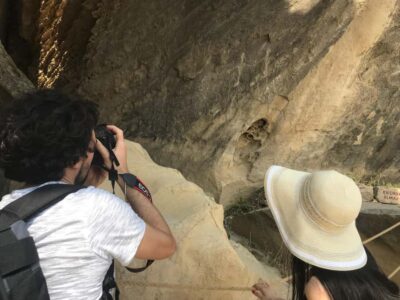
If you are the type who likes photo practice, this stop gives you good opportunities. The rocks are outdoors and spread out, so you can frame shots without feeling like you are stuck in a single corridor.
Two quick tips that make the hour more satisfying:
- Ask your guide to highlight a few key engravings first, so you know what to focus on.
- When you take photos, also take a breath and look without a camera for 20 to 30 seconds. It helps your brain learn shapes faster than only the lens.
Price and logistics: does $250 per group feel worth it?
The tour price is $250.00 per group, for up to 7 people. On paper, that might sound like a lot until you think in group terms.
If you fill the full group size, it works out to roughly $35.70 per person before any added costs for entry. That is a strong value for a full-day guided outing with a private vehicle, pickup, and WiFi on board.
What you get included is practical:
- an air-conditioned vehicle
- a professional, multilingual guide
- private transportation
- WiFi on board
- mobile ticket
On the other hand, museum and site tickets are not included in the base price. The total ticket cost is listed as 15 USD per person. So budget that on top of the $250 group price.
Here is how I think about it for you. You are paying for three things you would struggle to piece together alone: expert guidance, comfortable transport across multiple sites, and a tight route that covers the main fire and earth attractions near Baku. If you are short on time, that added structure is usually worth more than the ticket cost.
The tour also requires good weather. If it gets canceled because of poor conditions, you are offered another date or a full refund, so you do not lose your money.
In terms of time, the full duration is about 9 hours. Stops are shorter at the fire sites, longer at mud volcanoes, and then longer again at Qobustan. That balance keeps your day moving, but it also means you are not doing slow, lingering visits at everything.
What the day feels like on the ground
Think of the day as a sequence of contrast.
You start with fire and belief, where the key question is why people treated flame as something sacred and how that belief evolved across communities. Then you switch to another fire spot that reinforces the same theme but in a different setting. After that, you shift to earth science with mud volcanoes, where the story becomes about oilfields and deep geology. Finally, you end with human art carved into stone at Qobustan, which gives the day its emotional weight.
Because it is private and led by a guide, you can ask questions without waiting for a large bus group. If you want to understand the “why” behind the sites, this format supports that.
Also, the included air-conditioned vehicle and onboard WiFi reduce friction in a city day. On a 9-hour outing, little comfort choices add up.
Who should book this tour, and who might skip it
This tour is ideal if you want a high-value introduction to Azerbaijan beyond Baku’s city center. You get natural phenomena, an important cultural religion thread, and UNESCO rock art in one day.
It also suits you if:
- you have limited time and want a guided route
- you enjoy explanations, not just snapshots
- you prefer private touring, up to 7 people, rather than a crowded group
You might consider a different option if:
- you want a fully slow travel pace with long stays at each stop
- you dislike outdoor time, since multiple parts of the day are outdoors and weather matters
- you are hoping for lunch included, because it is not part of the package
Should you book Panorama Travel’s Qobustan and Fire Temple tour?
If your goal is to understand the Azerbaijani theme of fire, connect it to Zoroastrian symbolism, and then see it alongside UNESCO rock art and mud volcano geology, this is a very solid choice. The consistently high satisfaction signals that the guide experience is a strong point, and the route covers major highlights efficiently without feeling like a drive-by.
My decision rule for you is simple:
- Book it if you want guided context and you like mixing culture with nature.
- Reconsider if you are sensitive to long outdoor time or want lunch and museum tickets bundled into the price.
If you are visiting for a short time, this outing gives you a lot of meaning per hour. You leave with images, yes, but also with a clearer story about how humans, faith, and the ground beneath Baku shaped each other over time.
FAQ
What is the duration of the tour?
The tour is about 9 hours.
How much does the tour cost?
It costs $250.00 per group, up to 7 people.
Is pickup included?
Yes, pickup is offered.
Is this a private tour?
Yes. It is private, and only your group participates.
What sites are included?
You visit Ateshgah (Fire Temple), Yanar Dag, the Mud Volcanoes, and the Qobustan National Historical-Artistic Preserve Museum.
Are tickets included in the price?
No. Tickets are not included. The total ticket cost is listed as 15 USD per person.
Do you get a guide and transportation?
Yes. The tour includes a professional, multilingual guide and private transportation in an air-conditioned vehicle. WiFi is also available on board.
Is lunch included?
No. Lunch is not included.
Does the tour depend on weather?
Yes, good weather is required. If canceled due to poor weather, you are offered a different date or a full refund.
What is the cancellation policy?
You can cancel up to 24 hours in advance for a full refund.
Latest additions around Baku



Gobustan Petroglyphs & Mud Volcano Trips, compared.
Gobustan, Mud Volcano, Fire Mount, Temple Lunch Entry
Read our review →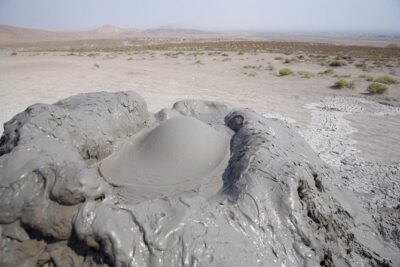
BEST Gobustan, Volcanoes & Absheron Fire Tour (Group or Private)
Read our review →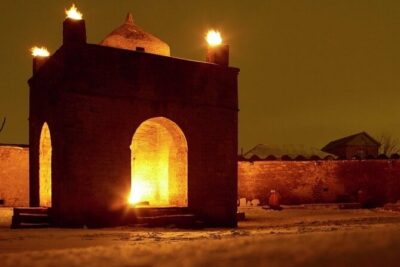
Gobustan, Volcanoes, Fire Temple and Yanardag Day Trip
Read our review →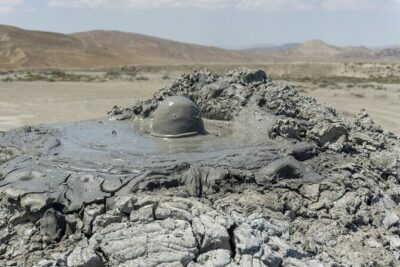
Gobustan & Mud, Fire Temple, Burning Mountain (Group & Private)
Read our review →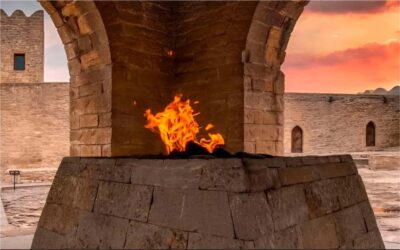
Gobustan-Mud Volcan-Fire Temple and Mountain Tour/Entrance inc
Read our review →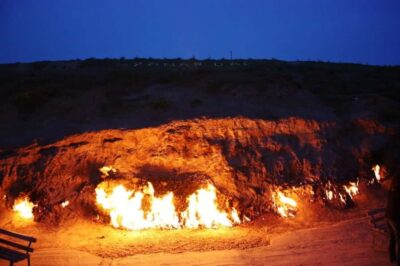
Gobustan Mud Volcanoes Temple & Entry tickets included
Read our review →Browse the lists this tour appears in